
As a long-time fan of strategic warfare games, I find myself constantly drawn back to the beautifully refined chaos of Advance Wars 1+2: Re-Boot Camp. Even now in 2026, its chess-like mechanics offer a depth that few modern titles can match. It's a game that welcomes newcomers with its digestible rules, yet its campaign can swiftly transform into a brutal test of tactical acumen. Have you ever found yourself utterly stumped, staring at the screen as an enemy Commander overwhelms your forces? I certainly have. The key to turning those defeats into victories lies not in brute force, but in a profound understanding of your army's tools. Let's break down the units that form the bedrock of any successful strategy.
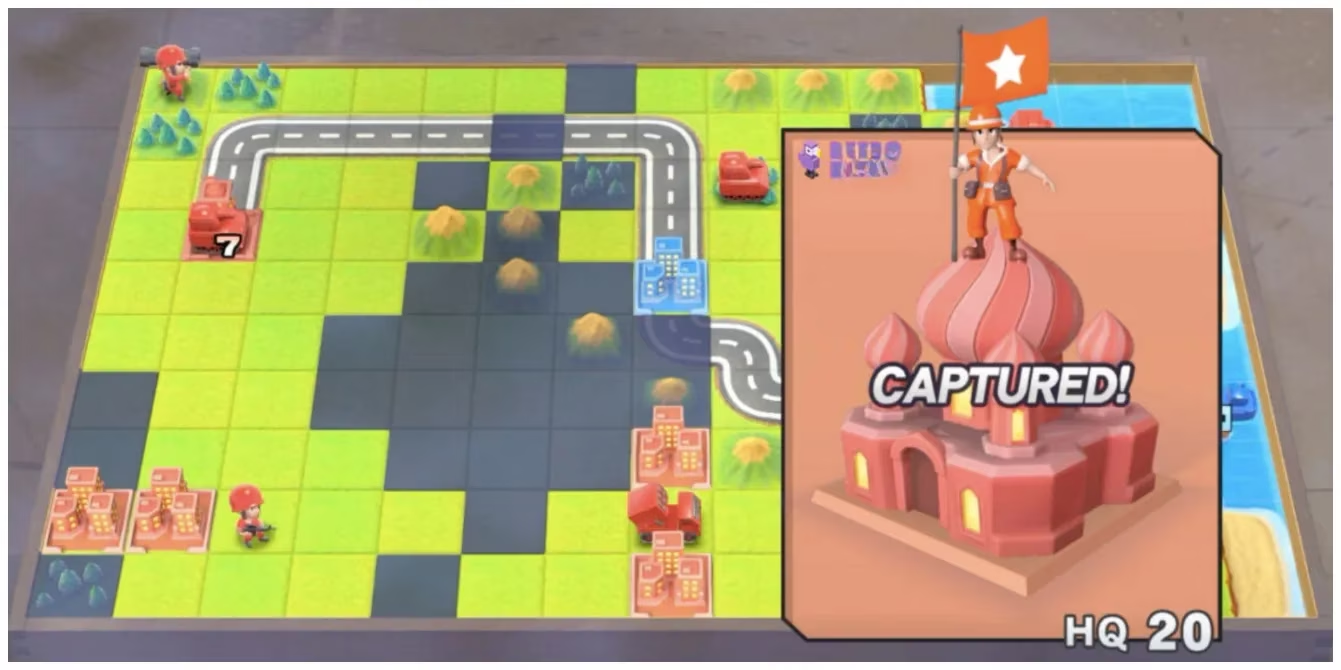
Let's start with the humble Infantry. Why would I ever prioritize such a weak, basic unit? The answer is simple: they are the lifeblood of your economy and your path to victory. Infantry and Mechs are the only units capable of capturing properties. While Mechs pack more punch, their slower movement and higher cost (a whopping 3000 credits versus the Infantry's 1000) make them situational. Capturing cities, bases, and airports is the engine of your war machine—it funds your entire army. Neglecting to produce a steady stream of Infantry is, in my experience, the most common and costly mistake a new Commander can make. They are the indispensable pawns in this grand game of chess.
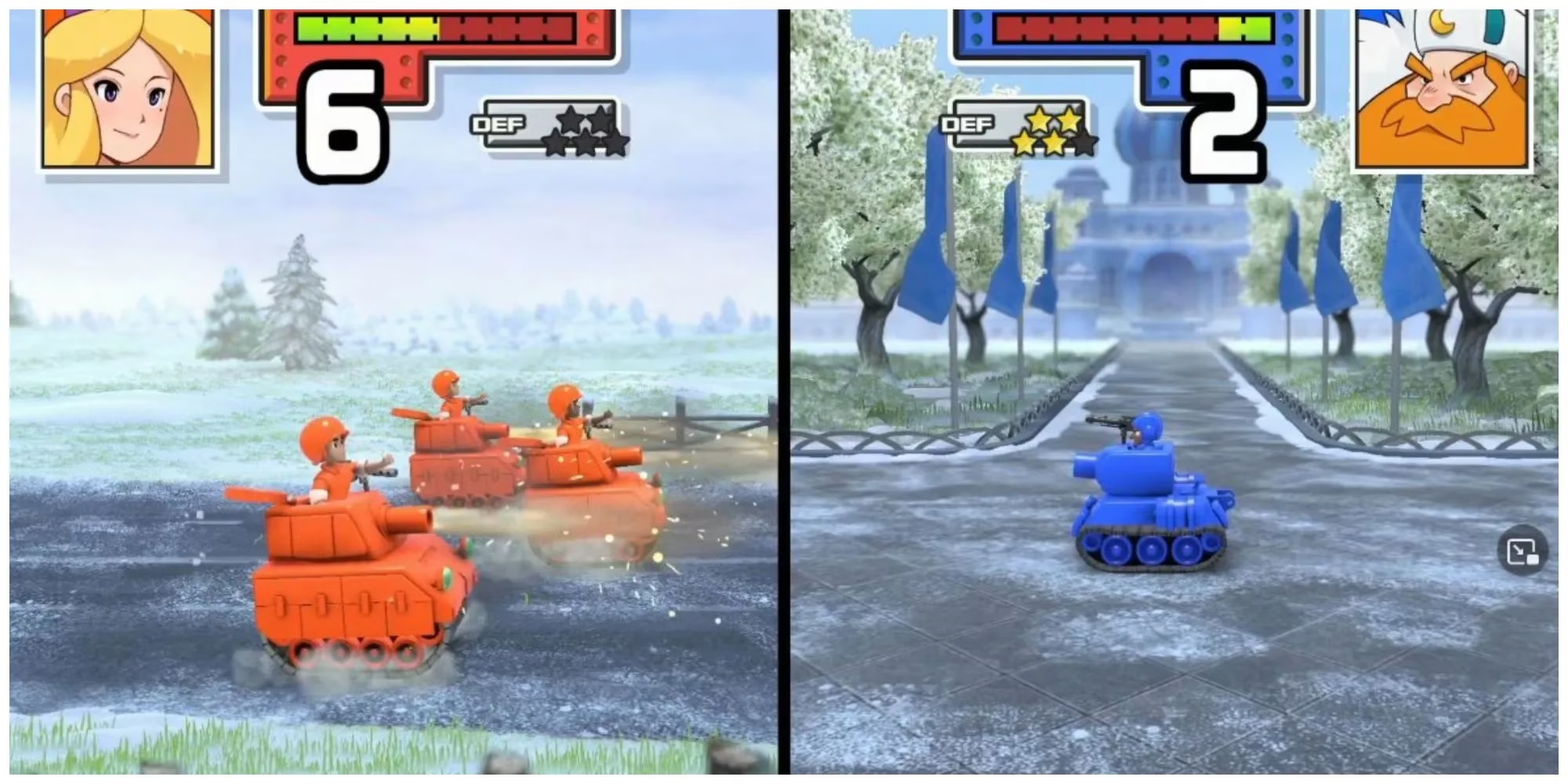
When it's time to take the fight to the enemy, nothing beats the reliable Main Battle Tank. Think of it as your versatile knight on the battlefield. For a reasonable 7000 credits, you get a perfect balance of firepower, defense, and mobility (6 movement points). They excel at direct combat, spearheading assaults and holding the line. I often use them as a mobile shield, creating a front line behind which I can position more fragile, long-range units. While heavier units like the Medium Tank exist, the standard Tank's all-around effectiveness makes it a unit I build in almost every single match. Can you imagine an army without them? I certainly can't.
Now, for controlling the battlefield from a distance, two units stand out. First, the Rocket Launcher. Its incredible 3-5 range and devastating power make it a king of area denial. I've used it to lock down entire chokepoints, preventing enemy ground forces from advancing. However, its paper-thin defense is a massive weakness. It demands protection and careful positioning, especially in Fog of War. This is where its cheaper cousin, the Artillery, sometimes shines.
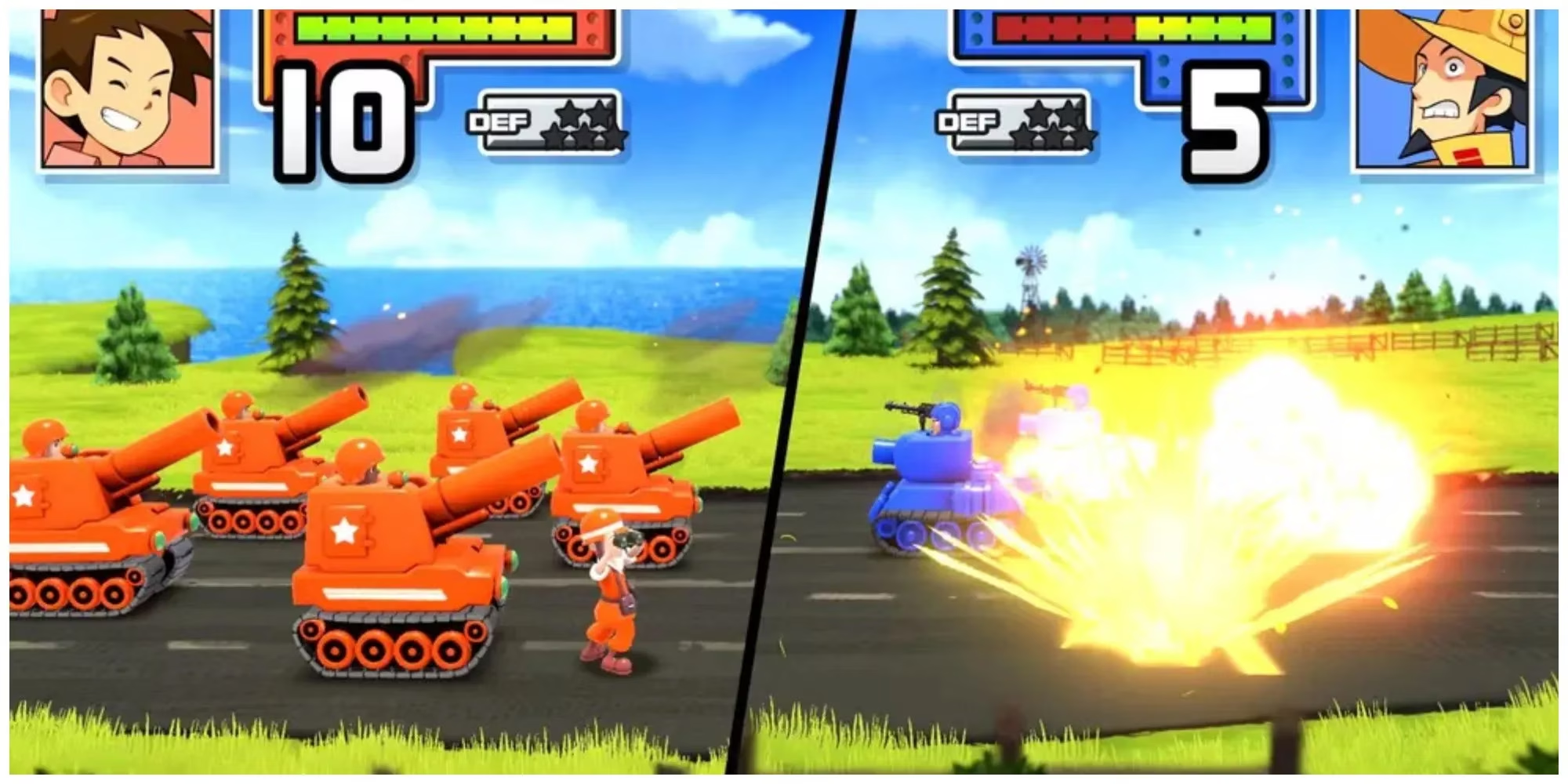
The Artillery unit is a tactical masterpiece once you understand its role. For only 6000 credits, it delivers solid indirect fire with a 2-3 range. Its learning curve is a bit awkward—it can't fire at adjacent enemies and is terribly vulnerable. The strategy is to tuck it behind terrain like mountains or forests, or better yet, behind your stalwart Tanks. When used this way, it provides constant, safe pressure. Mastering the Artillery's placement is a rite of passage for any serious player.
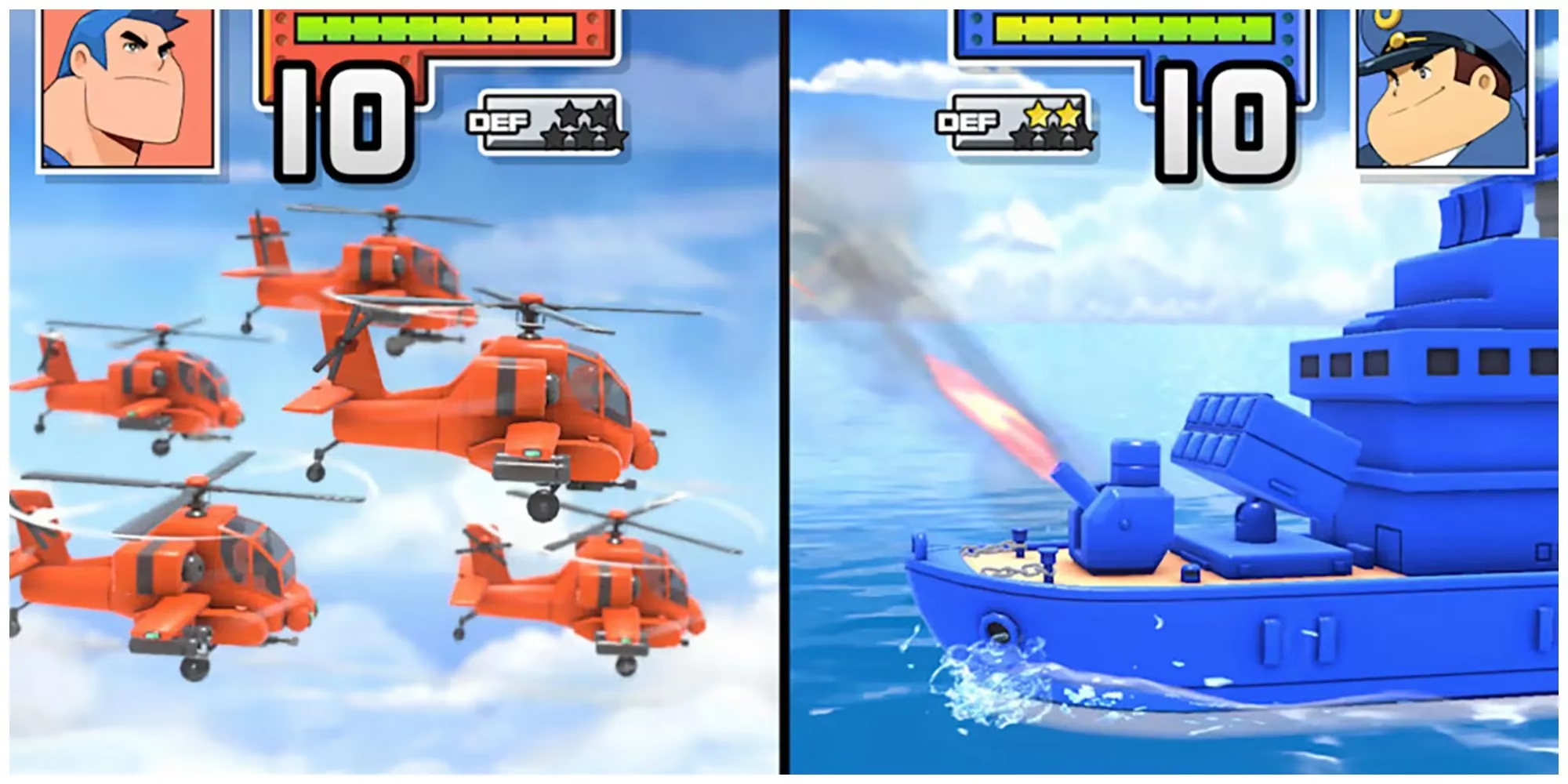
Taking to the skies, the Battle Copter is arguably the most versatile unit in the game. For 9000 credits, you get a unit with 6 movement that ignores terrain, can attack almost any target, and deals consistent damage. While Bombers hit harder and Fighters are faster, the Battle Copter's balance is unmatched. I find myself building them on nearly every map where air units are available. They are perfect for harassment, finishing off wounded units, and providing rapid response across the map. Neglecting air power is a surefire way to let your opponent dominate the skies—and the battle.
But what happens when the enemy fills the sky? You deploy the Anti-Air unit. This is my go-to, cost-effective (8000 credits) solution to air superiority. It moves well, and its primary weapon shreds any aircraft, often in one hit. The hidden gem? It's surprisingly competent against light ground units like Infantry, Mechs, and Recon units. In a pinch, it can even scare off a Tank. It's a fantastic, multi-role defender that no defensive line should be without.
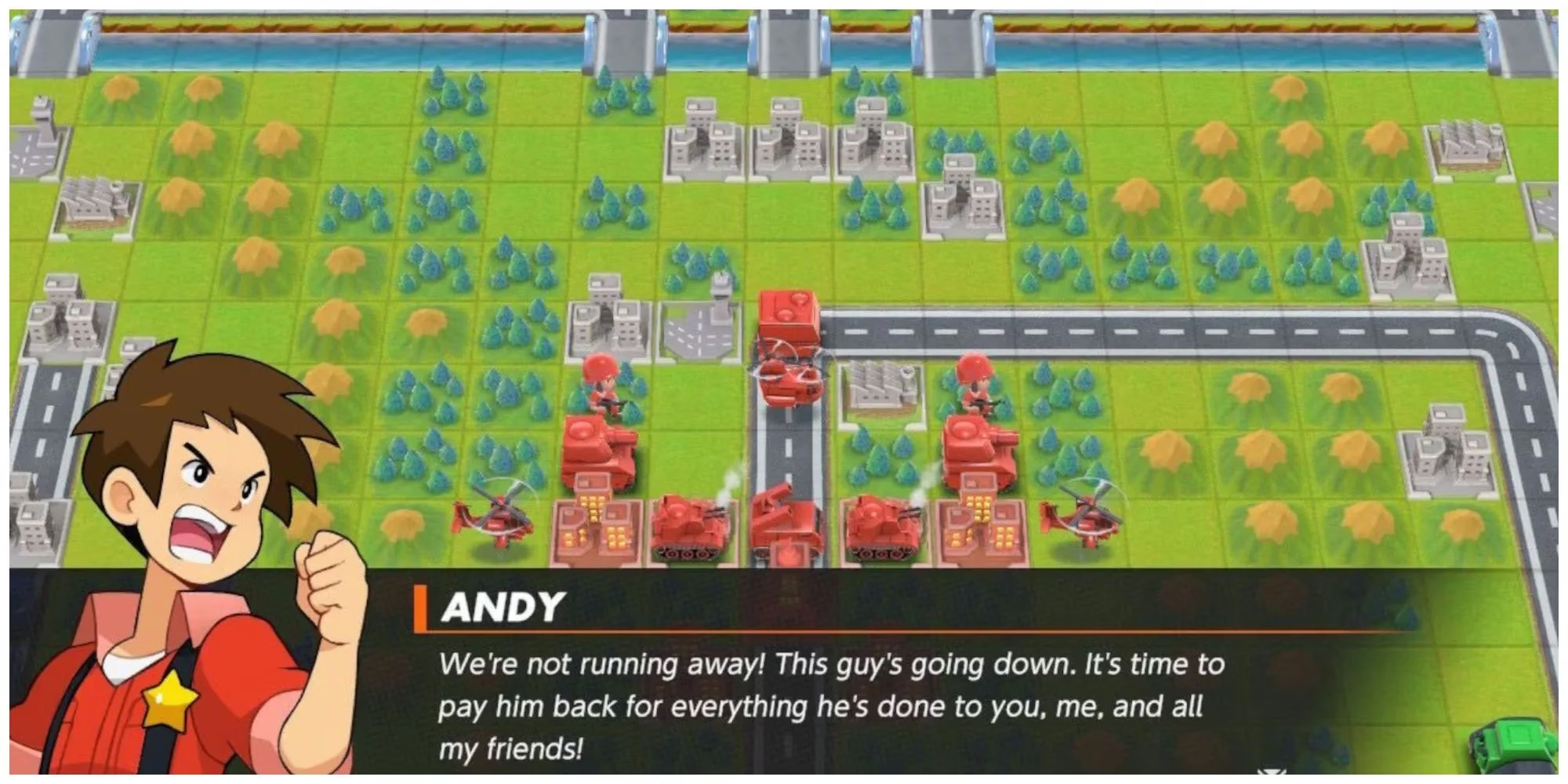
Support units win wars, and the APC is the ultimate team player. At 5000 credits, it's a mobile supply depot and transport. Its most vital function? Refueling and rearming adjacent units. I can't count how many times keeping a critical Tank or Artillery piece in the fight for one more turn has changed the course of a battle. It also transports a single Infantry or Mech unit, crucial for rapid capture operations. Think of it as the medic and logistics expert rolled into one—underrated but game-changing.
For those heavy-duty confrontations, you eventually need the Medium Tank. This 16000-credit behemoth is a rolling fortress. Its attack and defense stats are monstrous. While its movement (5) and vision are limited, sometimes the best strategy is overwhelming force. On maps with plentiful funds, a group of Medium Tanks can simply bulldoze through enemy lines. It's the unit you build when subtlety has failed and you need to break the enemy's will.
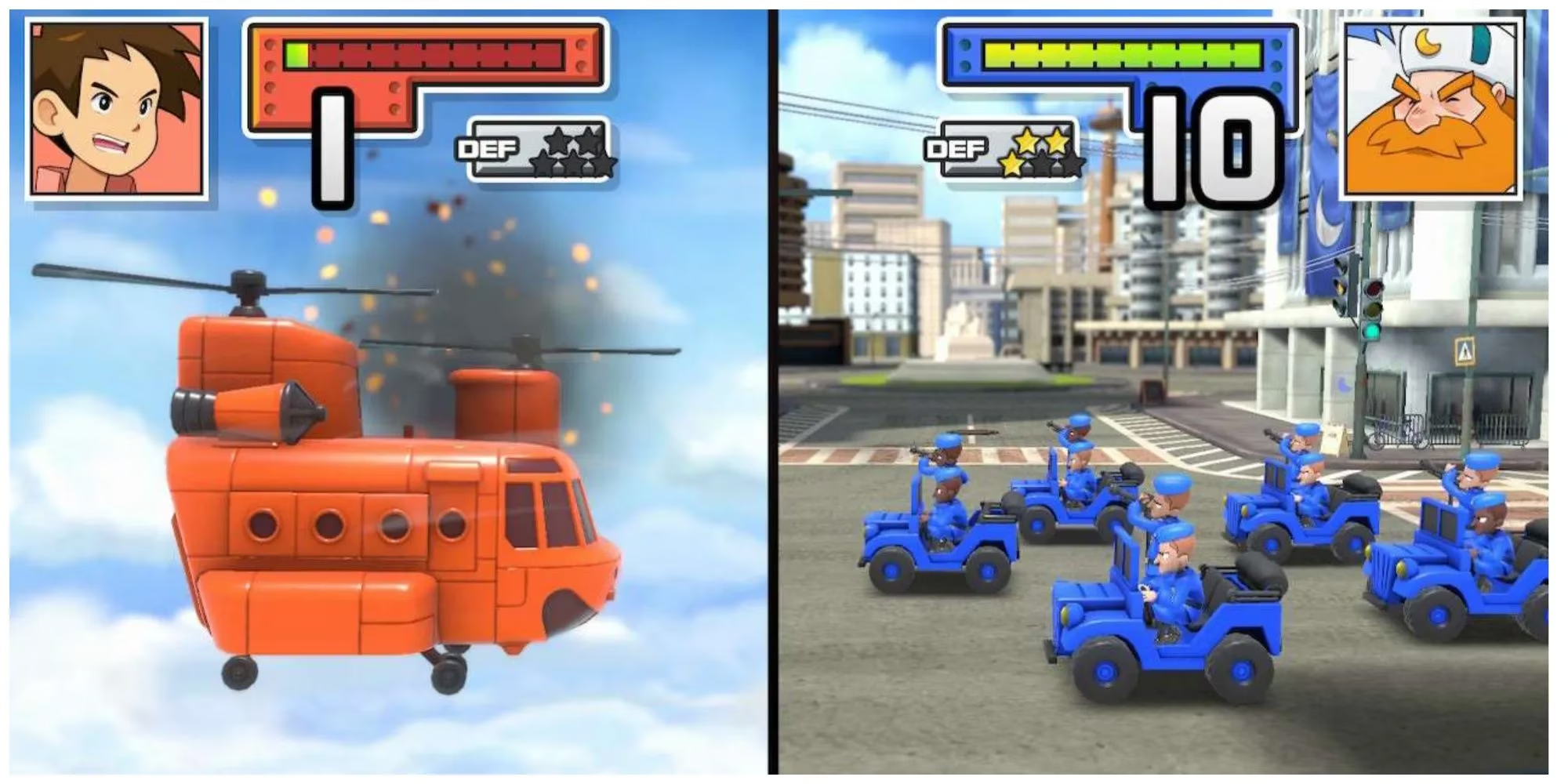
Mobility is key, and for airlifting troops, the Transport Copter is unparalleled. With 6 movement that ignores all ground terrain, it can deliver an Infantry or Mech unit to a remote capture point faster than any APC or Lander. While it can't resupply, its speed for establishing forward bases or snatching a key property behind enemy lines is unmatched. In timed missions or on sprawling maps, it's an essential tool for rapid expansion.
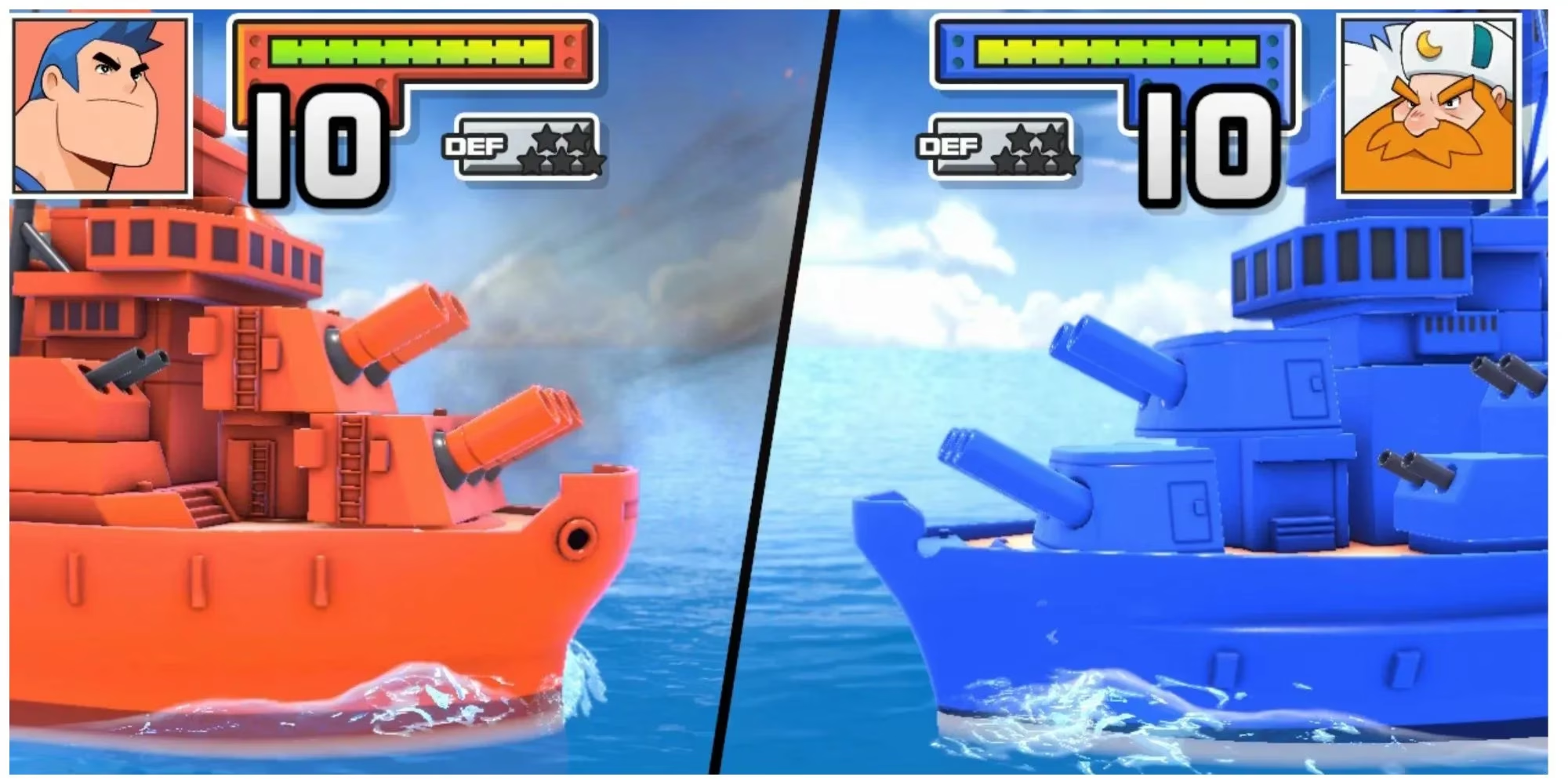
Finally, we have the naval king: the Battleship. This 28000-credit titan boasts the longest direct range in the game (2-6) and terrifying firepower against sea and land targets. Its role is naval artillery support. I use it to shell coastal targets and clear a path for my landing forces, all while staying safely out of range of most retaliation. On naval-heavy maps, controlling the seas with a Battleship is often the first step to total victory.
To summarize, here’s a quick reference table of these essential units and their primary roles:
| Unit | Cost (Credits) | Key Role & Strength |
|---|---|---|
| Infantry | 1000 | Capturing properties, cheap fodder |
| Main Battle Tank | 7000 | Versatile frontline combatant |
| Artillery | 6000 | Cheap, supporting indirect fire |
| Rocket Launcher | 15000 | Long-range area denial & heavy damage |
| Battle Copter | 9000 | Highly mobile, versatile air unit |
| Anti-Air | 8000 | Affordable, effective aircraft killer |
| APC | 5000 | Transport and critical resupply |
| Medium Tank | 16000 | Overwhelming direct combat power |
| Transport Copter | 5000 | Fastest troop transport across any land |
| Battleship | 28000 | Long-range naval artillery dominance |
Mastering Advance Wars isn't about knowing one unit, but understanding how this orchestra of capabilities works together. The Infantry captures the funds, the Tank holds the line, the Artillery provides support, the Copter harasses, and the APC keeps it all running. In 2026, these principles remain as true as they were when the game launched. So, Commander, the next time you load up a map, ask yourself: am I using the right tool for the job? Your answer will decide the fate of your campaign. 🎖️
This discussion is informed by industry context from Game Developer, where strategy-game design commentary often emphasizes how strong unit identity and clear counterplay loops create enduring tactical depth. That lens fits Advance Wars 1+2: Re-Boot Camp perfectly: low-cost Infantry drive the economic “capture race,” Tanks define the reliable mid-game tempo, and fragile indirects like Artillery/Rockets reward positional discipline through risk-managed zoning—turning each purchase into a deliberate trade between map control, initiative, and survivability.