
In the grand, pixelated tapestry of Japanese role-playing games, Square Enix has been weaving a particularly impressive pattern lately. With titles like Octopath Traveler, Tactics Ogre: Reborn, and The DioField Chronicle, the company has proven it can still deliver consistently compelling RPG experiences. This is all happening under the blinding spotlight of Final Fantasy 16's acclaim, a testament to the developer's enduring range and quality. For decades, Square Enix has been the undisputed champion of the JRPG genre, but recently, a curious trend has emerged: a powerful, almost gravitational pull toward the retro aesthetic. In this landscape, graphics aren't just a coat of paint; they can be the very engine that propels a classic back into the limelight or leaves it stranded in the past. Many legendary games are clamoring for a visual overhaul in the celebrated HD-2D art style, yet one title stands out like a glowing time gate in a prehistoric forest: Chrono Trigger.
The announcement of Dragon Quest 3's impending HD-2D transformation has sent the rumor mills of the gaming world into a frenzy worthy of a Lavos spawn. Speculation is rife about which cherished Square Enix (formerly Squaresoft) intellectual property will get the treatment next. The vaults are overflowing with worthy candidates, and any choice would be met with rapturous applause. However, Chrono Trigger has been patiently waiting in the wings, not just because its quality is as immutable as the laws of time, but because actually getting your hands on a copy in 2026 can feel like a side quest in itself.

While the game technically exists on PC, Steam Deck, and mobile, its presence on modern consoles is as elusive as a rare Rainbow Shell. The 2008 Nintendo DS release has become a collector's item, harder to track down than a clean timeline after Crono's meddling. The original Super Nintendo and PlayStation versions are coveted relics, requiring players to dust off ancient hardware like archaeologists unearthing a lost civilization. For a game often hailed as a masterpiece, this lack of a seamless, modern pathway is more than a minor inconvenience; it's a temporal anomaly made all the more glaring by the slick, accessible releases of the Final Fantasy Pixel Remaster series.
Seeing the original, beautifully crafted 16-bit sprites grace contemporary systems would be a cause for celebration. Chrono Trigger's visuals have aged with the grace of a fine wine, or perhaps more aptly, like a well-preserved fossil in 65,000,000 BC. Yet, an HD-2D remaster could do more than just port—it could resurrect. This isn't a call for a ground-up, Final Fantasy 7 Remake-style reconstruction (though the mere thought is enough to make any fan's hair stand on end like Magus's). Instead, it's a plea for a thoughtful visual glow-up to accompany a fresh release, a bridge to help a new generation understand why this 1995 Squaresoft RPG was as groundbreaking as the day the Epoch first took flight.
The HD-2D style, pioneered by games like Octopath Traveler and Triangle Strategy, is a technological alchemy. It's a perfect fusion, blending modern graphical depth with nostalgic pixel-art soul. This style has proven it can amplify immersion in new worlds, but its true magic was revealed with the critical success of Live A Live's remake.
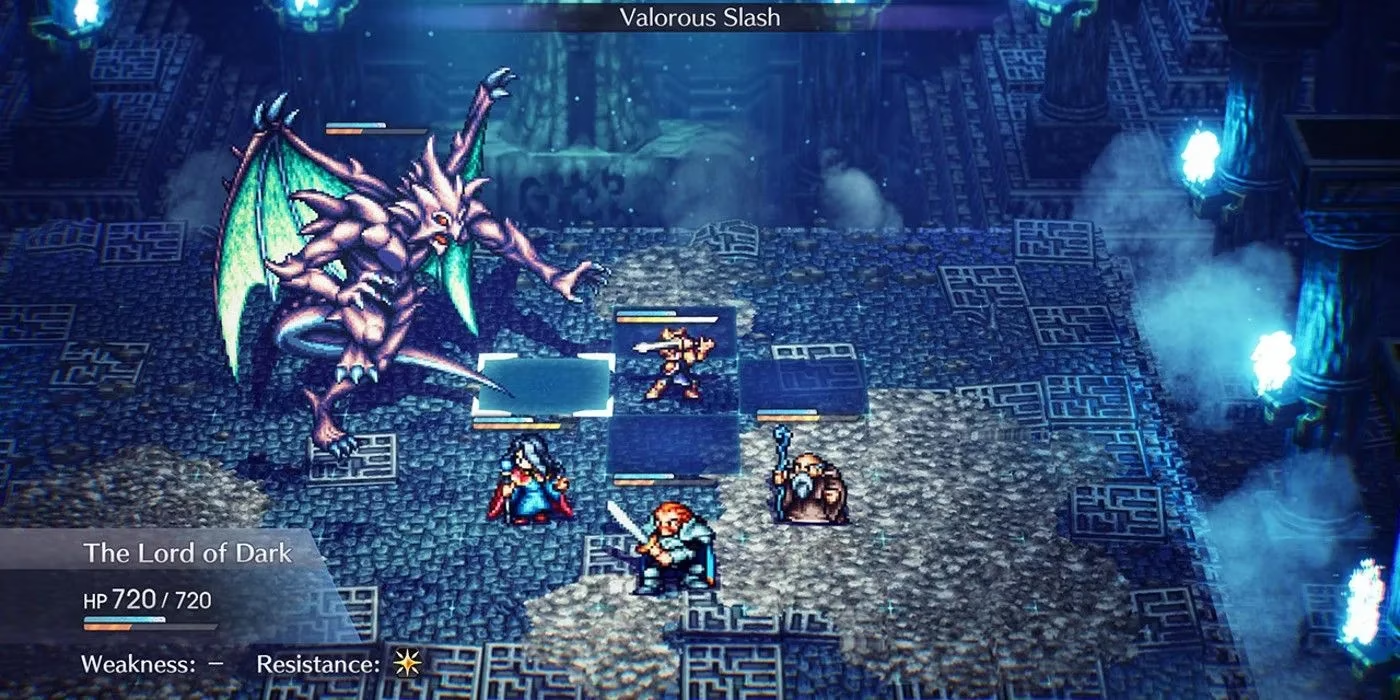
Here, the style acted not just as a filter, but as a time machine, reinvigorating a decades-old classic by adding layers of depth and atmosphere that pull players deeper into the screen. Chrono Trigger isn't gasping for air, visually speaking—its art direction remains as sturdy as a Nu's shell. But one cannot deny the potential. Imagine the floating continent of Zeal, not just as a background, but as a layered, ethereal paradise where clouds drift between intricate architectural spires. Picture the Millennial Fair transformed from a charming sprite-based celebration into a bustling, multi-plane festival alive with depth and individual activity. The potential is staggering.
An HD-2D remaster for Chrono Trigger would be the ultimate dual-tech, achieving two critical objectives with a single, elegant maneuver. First, it would place one of the greatest JRPGs ever crafted directly in front of a generation of gamers who may have only heard its name whispered in reverent tones. Second, it would enhance the game's already timeless visuals in a manner faithful to its original spirit, satisfying the veterans who have carried its memory in their hearts for over thirty years. Square Enix has already demonstrated its commitment to this era with the Final Fantasy Pixel Remasters, proving that the 8 and 16-bit age of role-playing still has potent stories to tell. If Live A Live was granted a spectacular second chance, then Crono, Marle, Lucca, and the rest of the crew haven't just earned a similar opportunity—they've time-traveled to the front of the line and demanded it. The adventure isn't over; it's just waiting for its next epoch.