
It’s 2026, and the halls of The Somniel still echo with debates about the Fell Xenologue DLC. Three years after its release, Alear’s most unsettling chapter refuses to settle quietly into Fire Emblem history—and for good reason. The expansion didn’t just add maps and classes; it tugged at the very fabric of Emblem allegiance. Players who thought they understood the rules of corruption soon found themselves staring at a red-glowing Tiki, hearing her speak. That single image flipped assumptions like a critical hit on a low-res unit.
The base game had made one thing brutally clear: Corrupted Emblems don’t talk. When the Four Hounds yanked the rings from Alear’s fingers in Chapter 11, every summoned hero—Marth, Celica, Sigurd—shifted into a crimson-tinged puppet. They fought mechanically, their voices snuffed out like campfires in a storm. You could almost feel the rings straining against the Fell Dragon’s grip, but silence was absolute. It was a terrifying display of control, hammering home the idea that these spectral warriors had zero autonomy when used for evil. Fan communities, you know, ran wild with theories about whether the Emblems even suffered or just became empty shells. The game never said—it just let the quiet hang there, heavy as a boss’s blackened armor.
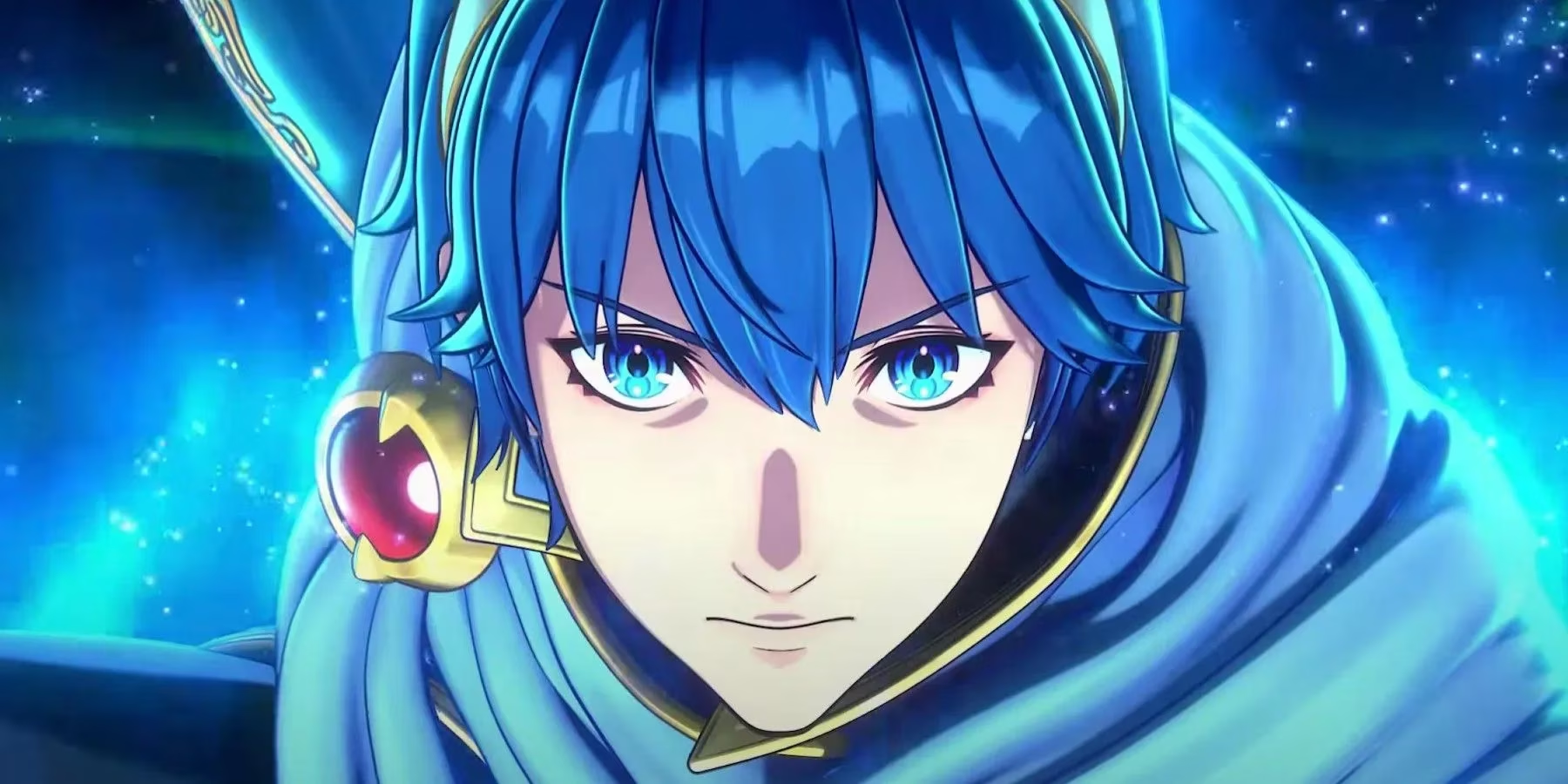
Then the Fell Xenologue trailer dropped. Suddenly, the cursed rings weren’t just on villains—they were on friendly faces. Alfred, Diamant, Timerra, each twisted into darker, survival-hardened versions of themselves. And standing beside them? Emblems like Hector, Camilla, and Tiki, all drenched in that telltale red light. But here’s the kicker: Tiki moved her mouth, and words came out. She spoke directly to Alear, her tone weary but unmistakably her own. The Emblem wasn’t a mute thrall. She had something to say, and that single act of will threw the entire corruption lore into a delicious mess.
Anyone who’d followed Fire Emblem Engage’s narrative clues immediately started connecting dots. Alear’s dual nature—Fell Dragon blood mixed with Divine Dragon upbringing—had always been the emotional anchor. The revelation in Chapter 20 that Griss’s taunts were true (“You rely on incantation, not prayer… because you are of the Fell line”) tore the protagonist’s identity in half. Yet the Emblems stuck around, not because of divine mandate, but because they believed in Alear’s character. That trust was the team’s secret weapon. In the Fell Xenologue, something fractured that trust at a universal level. Alt Alears, hostile nations, a grave at the start—all signs pointed to a timeline where Lumera’s blessing never happened, or worse, where Alear fully embraced the Fell heritage. No wonder the Emblems wavered.
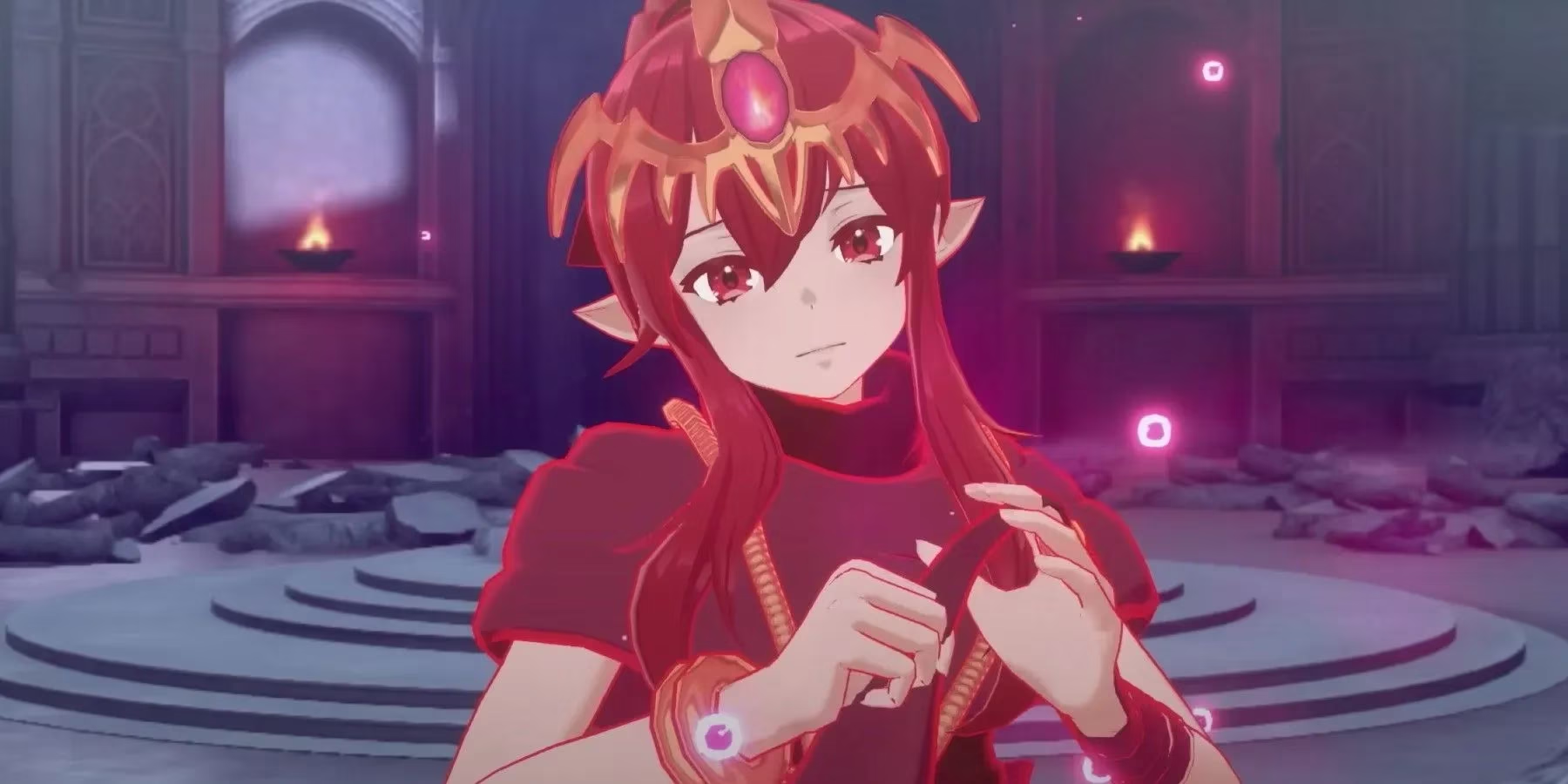
Believe it or not, Tiki’s momentary freedom haunted everyone. Divine Dragons aren’t common. Maybe her innate power let her shove aside the Fell influence just enough to murmur a warning or a plea. But if Tiki could do it, what about the others? Were they silently screaming inside their rings all along? The DLC never fully answers, preferring to scatter breadcrumbs across desolate battlefields. Alcryst’s voice cuts through one scene, accusing Alear’s “dragon divinity” of being a farce—a line that cuts deep when you realize he might be talking to the wrong Alear altogether. The corruption becomes less about evil mind-control and more about broken narrative threads, where heroes are just pawns in someone else’s survival game.
The battles themselves—Hortensia clashing with a corrupted version of herself, Fogado firing arrows at his own twisted smile—turn the mirror on every lord. The Emblems on both sides seem caught in a philosophical riptide. They’re not simply tools; they’re witnesses. And sometimes, witnesses start talking even when they’re supposed to stay silent. That’s the heart of the expansion’s genius. It doesn’t overwrite the base game’s rules; it bends them until you see the light bleeding through.
Community discussion in 2026 has only deepened the mystery. Data miners long ago confirmed that Tiki’s voice lines aren’t a glitch—they’re flagged as
“partial autonomy.” Players still race through replays, hunting for split-second flickers in other Emblems’ animations, convinced that somewhere in the Fell Xenologue, a corrupted Camilla twitched her lips or a Hector grunted with recognition. There’s a beautiful desperation in that search, as if fans collectively refuse to accept that Emblems are ever truly lost. The game’s epilogue leaves the alternate Alears ambiguous, but the real question remains: who was actually holding the leash? One theory suggests the Fell Dragon’s influence diminished because the Alear pulling the strings had forgotten what it meant to be divine—leaving just enough space for a tired, ancient manakete to whisper through the static.
Three years later, Fire Emblem Engage still holds its secrets close. The Fell Xenologue DLC stands as a testament to smart narrative risk, the kind that doesn’t just hand over answers but invites players to fill the silence with their own theories. As Tiki’s voice fades into the roar of battle, one thing is clear: corruption, in the world of Emblems, is never just about a red glow. Sometimes it’s the light refusing to go out.