
Fire Emblem Engage is a tactics game that stacks systems like a chef stacks pastries: weapon triangle, break, Engage meters, terrain, chain attacks, and the Draconic Time Crystal. In 2026, the game still rewards players who treat every map as a puzzle rather than a slugfest. One wrong step can turn a clean formation into a massacre. One clever break can flip a boss fight. The good news is that every system follows clear rules. Once players learn how those rules flirt with each other, they can feel like the Divine Dragon of legend.
Weapon Dynamics: Rock, Paper, Sword
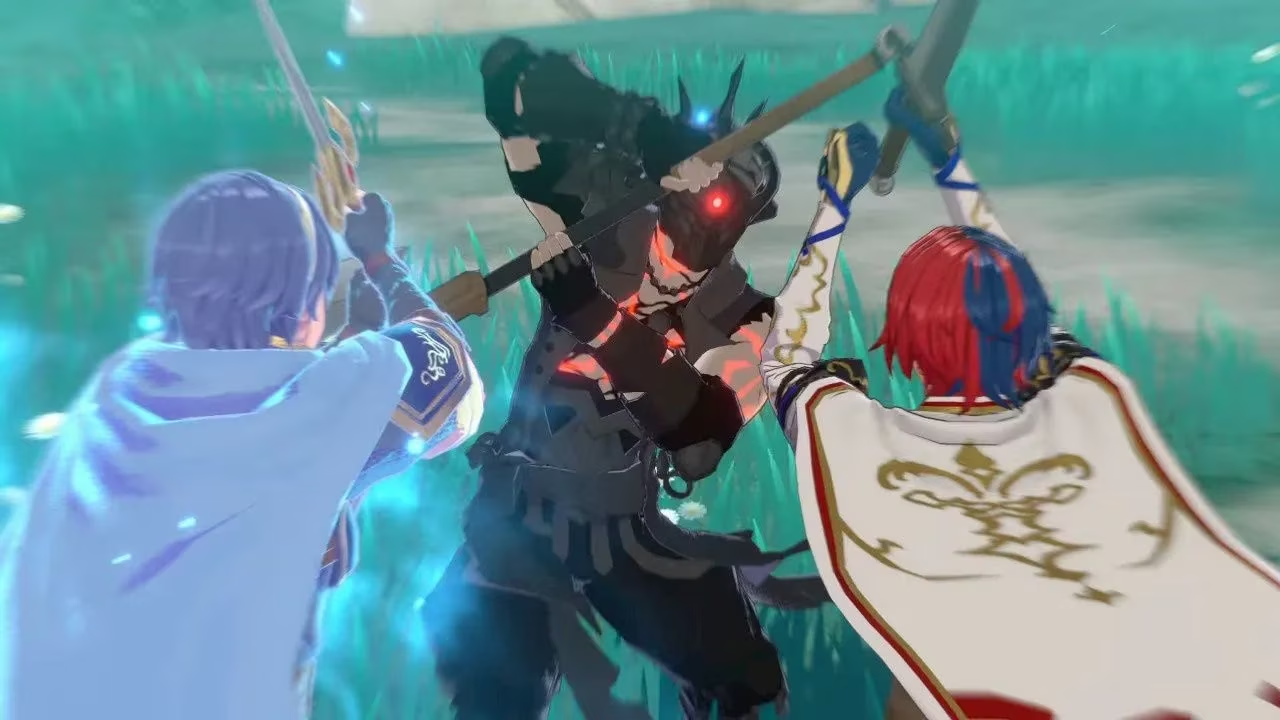
The weapon triangle is a three-way grudge match. Sword beats axe, axe beats lance, and lance beats sword. Attacking with the stronger type deals extra damage and breaks the enemy stance. That break matters more than raw numbers, because a broken foe cannot counter for the rest of the turn.
| Attacker | Strong Against | Weak Against |
|---|---|---|
| Sword | Axe | Lance |
| Axe | Lance | Sword |
| Lance | Sword | Axe |
| Bow | Flying units | Armored units |
| Magic | Armored units | ... |
Bows and magic are specialty tools. Archers can delete flying units in one shot. Mages can melt heavily armored knights who laugh at swords. Chain Attacks do not break, even when the backup unit uses an opposing weapon type. Armored targets also change the math: an axe may counter a lance, but heavy armor can still reduce the damage to a sad little tickle.
The Break System: Stop The Counterattack
Breaking is simple in theory. Hit an enemy with a weapon that beats theirs, and their stance shatters. They cannot counter for the remainder of that turn. Injured units can attack safely. Squishy mages can chip a dangerous foe without instantly dying.
Martial attacks break mages and archers. That detail is easy to miss, and it is a lifesaver. A Qi Adept who punches a mage can shut down a lethal spell before it lands. Here is the kicker: damage is sometimes less important than the break itself.
The Engage System: Borrowed Legends, Stolen Turns
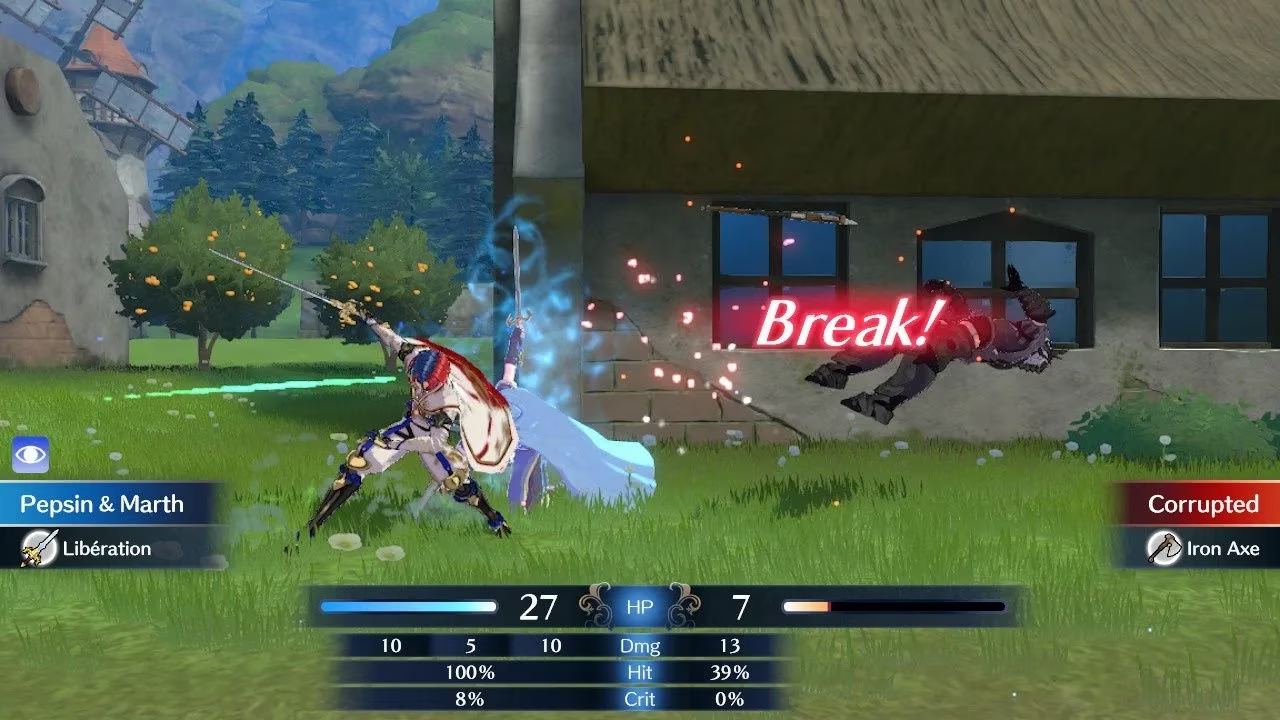
Emblem Rings are the headline mechanic. They let players customize units in wild ways. Sigurd grants mobility. Celica lets mages attack twice with magic. Each Emblem offers passive bonuses, inherited skills, and a spectacular Engage attack that can flip a map.
The Engage meter starts full in every battle. Using the Engage command fuses a unit with its Emblem for three rounds. After that, the unit returns to normal. The meter refills through combat, but the fastest method is ending a turn on an Emblem Energy Pool. Those glowing tiles are momentum machines. A player can fire a devastating Engage attack, step onto a pool, and recharge almost immediately.
Emblem attacks are once per Engage. Some warp across the map. Some refresh surrounding allies for an extra turn. Others unleash enough damage to erase a boss. Experimentation is mandatory. The right ring on the wrong unit is a waste. The right ring on the right unit is a win condition.
Battlefield Traversal: Terrain, Bodies, And Energy Pools
Fire Emblem Engage ignores height. Elevation means nothing. Ground type, buildings, and obstacles mean everything. Certain tiles boost evasion. Healing tiles restore HP to any unit that ends a turn there. That healing terrain is absurdly strong on a Qi Adept with Chain Guard, because the unit can tank a hit, heal, and tank again.
Negative terrain exists too. Players can clear it, replace it, or bait enemies onto it. Positioning is the real weapon. Body blocking is another core skill. Units usually cannot move through each other. Sturdy frontliners form a wall so mages and archers can breathe. Thieves and certain other units ignore this rule, so players should never assume a backline is perfectly safe.
Emblem Energy Pools are the final traversal treasure. Ending a turn on one refills the Engage meter completely. If a pool sits near a fight, a unit can use an Engage attack and then instantly recharge. That swing can decide an entire chapter.
Attack Radius: The Danger Zone
Red lines show enemy attack ranges. They are helpful, but they are not foolproof. The lines account for current obstructions. If a wall breaks or an ally moves, a previously safe unit can become exposed. Moving one body can open a lane to a mage. Moving another can leave a healer in range of three enemies.
The Danger Radius, mapped to ZL, gives the bigger picture. It shows every threatened tile around the player's army. Before ending a turn, players should check it. A single careless shuffle can turn a cozy formation into a death trap.
Unit Roles: Armored, Flying, Backup, Qi Adept
Armored units are walking brick houses. Physical attacks bounce off them. Archers often cannot scratch them. Magic, however, turns them into scrap. They also have poor mobility, so players should remove mages before pushing them forward.
Flying units are the opposite. They ignore terrain and reach places that grounded units only dream about. They also crush mages. The trade-off is brutal: archers shred them. If no archer is nearby, a flier can dominate a map. If one is nearby, that flier needs a bodyguard.
Backup units provide Chain Attacks. Qi Adepts provide Chain Guard. Both are support roles, but they function differently. Chain Attacks are automatic and stack. Chain Guard is activated and limited. Together, they make formations feel like a living machine.
Chain Attacks: There Is No I In Team
A backup unit positioned beside an enemy triggers a Chain Attack whenever that enemy is attacked. This works at range too. Multiple backup units stack their chip damage. The damage is a set amount, so even armored foes take something. Chain Attacks do not break, and they can miss based on accuracy, but they still add pressure.
This is why backup units are sneaky. They do not need to be the strongest fighters. They just need to stand in the right place. A ring of backup allies can turn a boss's health bar into a group project.
Chain Guard: Taking One For The Team
Qi Adepts can activate Chain Guard to take a hit for another unit. The damage costs twenty percent of the Qi Adept's health. The catch is severe: the Qi Adept must be at full health to use it. One use burns the ability for that turn.
Chain Guard is not a spam button. It is an emergency shield. When a unit is exposed and an enemy is about to exploit a weakness, Chain Guard can save a life. Keeping Qi Adepts last in the turn order helps, because they can rescue a bad situation after everyone else has moved.
Draconic Time Crystal: Rewind Wisely
The Draconic Time Crystal is a patient guardian angel. It rewinds time after a bad call. For permadeath runs, it is a gift. The game does not advertise the limit, but there is one. Eventually, the crystal refuses to rewind any further. Players should save during battle to create a reliable fallback point.
One more quirk: missed shots cannot be rerolled by rewinding. The same attack will miss again. The game knows the cheesy ways. A completely different action gets a fresh roll. No shame in rewinding, but players should learn from the mistake instead of repeating it.
Final Thoughts
Fire Emblem Engage asks players to juggle weapon advantage, break, Engage timing, terrain, chain attacks, and rewinds. In 2026, the combat still holds up as a beautiful puzzle box. Master one system at a time. Then combine them. The battlefield will stop feeling like chaos and start feeling like a playground.