
Fair warning: major spoilers for Fire Emblem Engage are discussed below. For many players, Fire Emblem Engage moved the tactical formula in a welcome direction. The focus on positioning and weapon matchups deepened with stance breaking, Emblem pair-ups, and expanded skill options. Yet while the combat mechanics felt fresh, the enemy design did not always match that creativity. In the later chapters especially, the game leans on a small group of recurring villains so frequently that boss fights stop feeling like dramatic milestones and start feeling like routine chores.
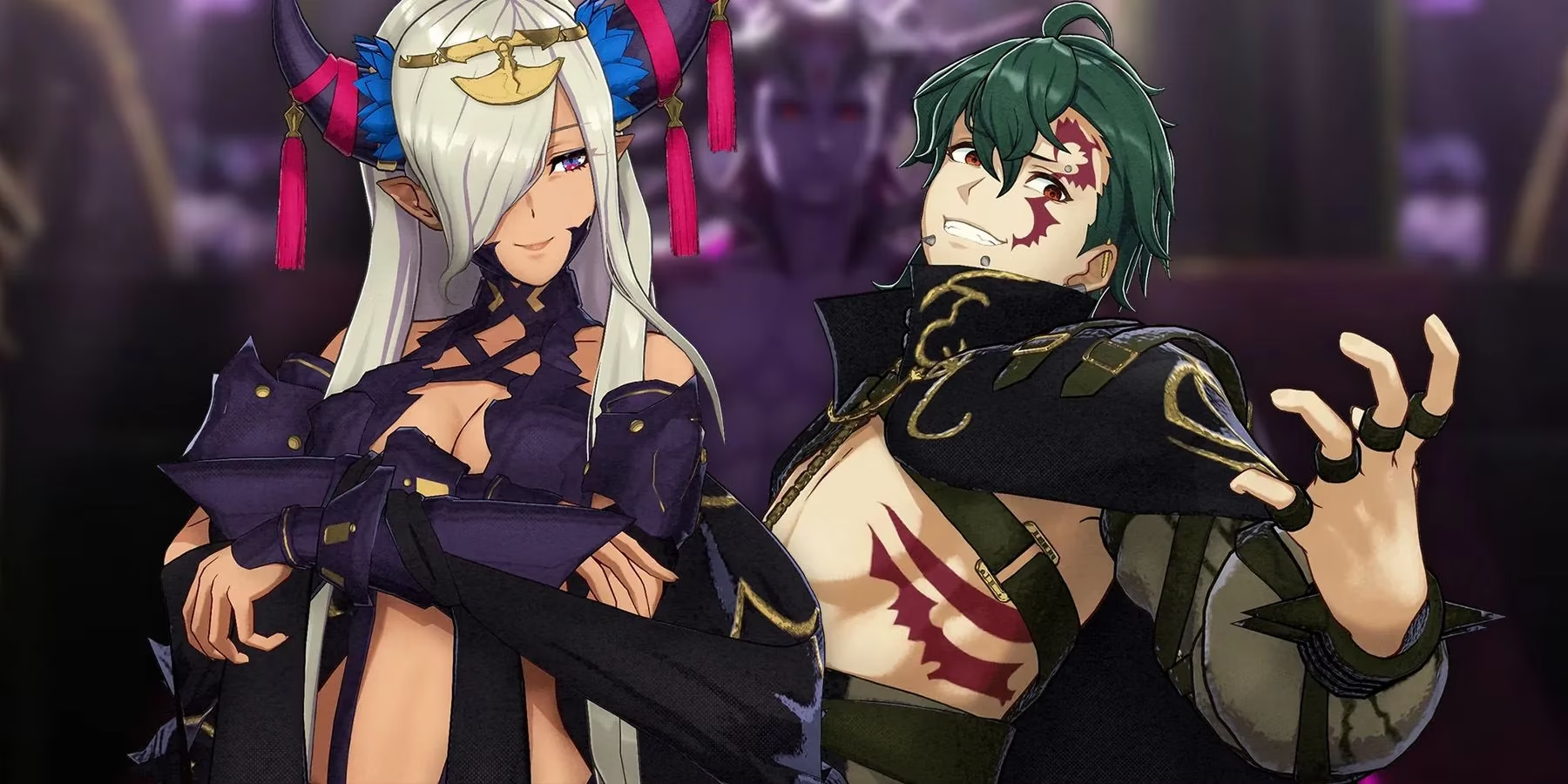
Part of the joy in a tactical RPG is solving a new puzzle each battle. Strong level design encourages players to study terrain, inspect enemy ranges, and adjust unit composition before committing to a strategy. Fire Emblem Engage does this well in its early chapters. However, the back half of the story undercuts that tension by returning to the same handful of antagonists again and again. Instead of facing a varied lineup of commanders, players spend too much time fighting the Four Hounds.
The Four Hounds are introduced in Chapter 11 as servants of the Fell Dragon and protectors of Veyle. They arrive as the most threatening forces on the map while the player's army rushes to escape. It is an effective introduction, but it sets up a pattern that wears thin quickly. After that chapter, nearly half of the remaining maps feature some combination of the Four Hounds and Veyle as bosses. Their gear, roles, and tactics barely shift from one encounter to the next, so preparation becomes a matter of memorization rather than adaptation.
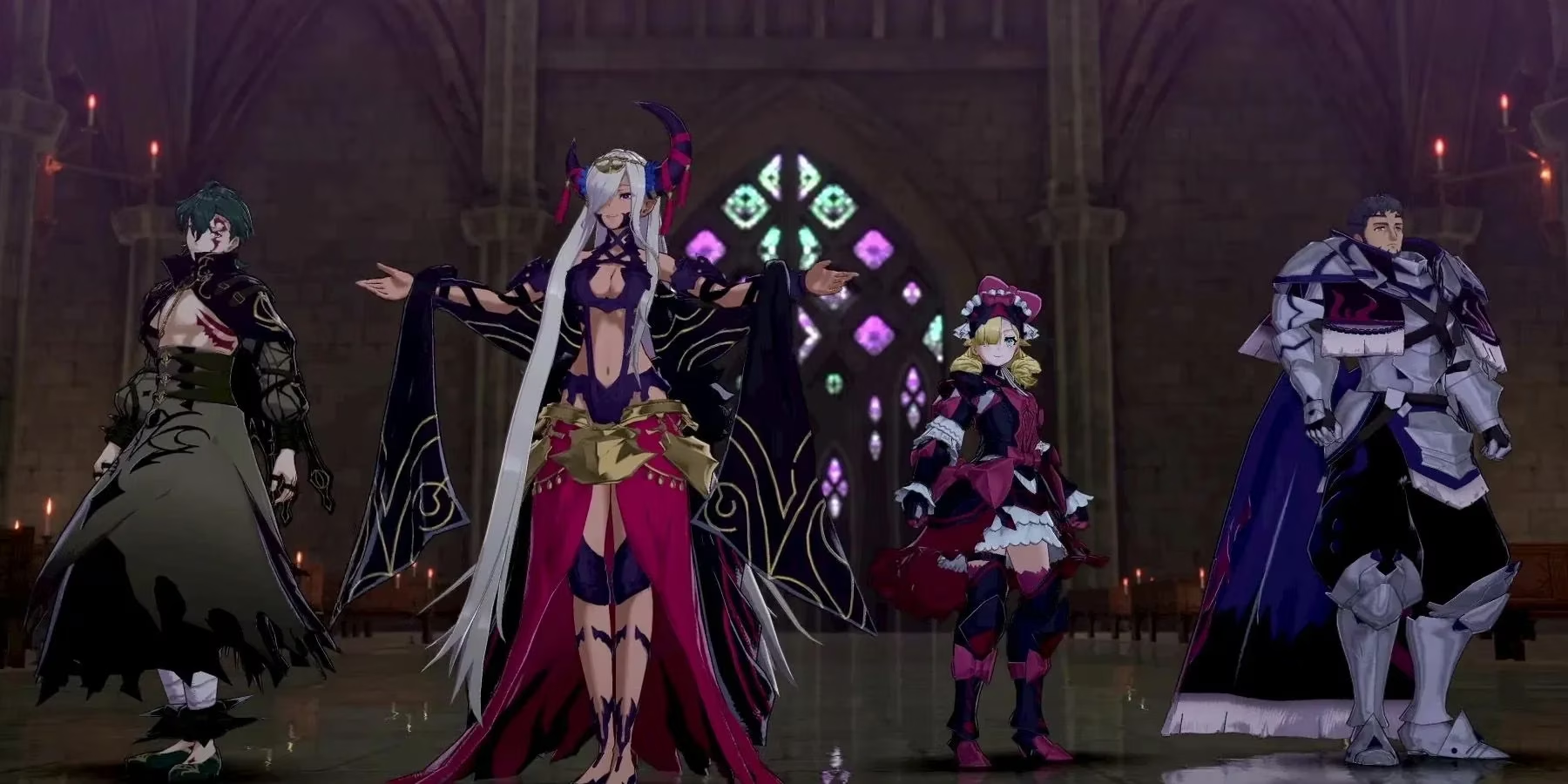
The recurring members are easy to identify and even easier to counter once players learn their habits. A quick breakdown of the usual suspects looks like this:
| Character | Unit Type | Common Combat Role |
|---|---|---|
| Mauvier | Mounted unit | Uses a Flame Lance and covers ground quickly |
| Marni | Armored unit | Swings an axe and soaks up physical hits |
| Griss | Sage | Casts powerful magic from a distance |
| Zephia | Wyvern rider | Mixes tomes and swords from above |
| Veyle | Hybrid attacker | Combines magic and daggers |
Some chapters pair Mauvier with Marni, while others pit players against Griss and Zephia. Veyle often appears alongside them, and the map objective frequently becomes a simple order to defeat all present bosses. The combinations change slightly, but the core strategy does not. A mounted Flame Lance user, an armored axe fighter, a magic Sage, and a Wyvern-riding hybrid attacker leave little room for surprise after the first few clashes.
Adding to the predictability, these bosses tend to arrive with the same Corrupted Emblems equipped. That choice makes them tougher on paper, but it also removes even more uncertainty from combat. A powerful enemy becomes far less intimidating when its toolkit never evolves. Over time, the player can build a checklist: bait Marni into range, break Mauvier's stance with the right weapon type, silence or rush Griss, and handle Zephia with anti-air options. Victory feels less like conquering a major villain and more like completing an errand.
The story suffers from this repetition as well. A boss fight should carry weight, especially when the enemy is a key figure in the plot. Defeating a proud antagonist only to watch them retreat and return later can work once or twice for drama. When it happens throughout the entire back half of the game, the narrative loses its bite. Important story beats begin to feel like stalling. By the time the Four Hounds finally meet their definitive ends, many players feel a sense of relief rather than satisfaction. The emotional payoff is weakened because the game already asked players to defeat these same characters too many times.
Older Fire Emblem titles also use recurring villains, so the series is familiar with this trope. The difference is often in how those older games handle the final confrontations. A major antagonist may send lieutenants to fight as stage bosses first, saving a direct clash for a more meaningful moment. That structure makes the eventual defeat feel earned and satisfying. Fire Emblem Engage, by contrast, places the Four Hounds directly in front of the player over and over. The group becomes less like a feared elite squad and more like a recurring obstacle that refuses to stay down.
Fire Emblem Engage still has plenty to offer tactical fans. Its combat systems add depth, its Emblem mechanics are creative, and its presentation is bright and energetic. The game also received quality-of-life improvements, such as the 1.2.0 update making support conversations easier to collect. But the repetitive boss design remains a notable weakness. A tighter second half, with more varied commanders or fewer retreats, could have turned the Four Hounds into unforgettable villains. Instead, they become a lesson in how too much familiarity can drain the tension from even the most powerful enemies.