
Since its earliest days, the Fire Emblem franchise has stood as a beacon for hardcore strategy-RPG aficionados, largely due to its unflinching permadeath mechanic. The prospect of losing a beloved unit forever—cut down by a stray critical hit or a miscalculated advance—has historically created a tension that few other series could replicate. However, as the franchise grew in popularity and reached wider audiences, Intelligent Systems gradually introduced alternatives that softened this defining feature. By the time Fire Emblem Engage arrived in early 2023, optional modes like Casual and the rewind-based Divine Pulse had already diminished the teeth of Classic Mode. Yet it was that same year's Fell Xenologue DLC that truly shook the foundations: for the first time in a mainline story expansion, permadeath was removed entirely, regardless of whether players selected Classic or Casual difficulty.
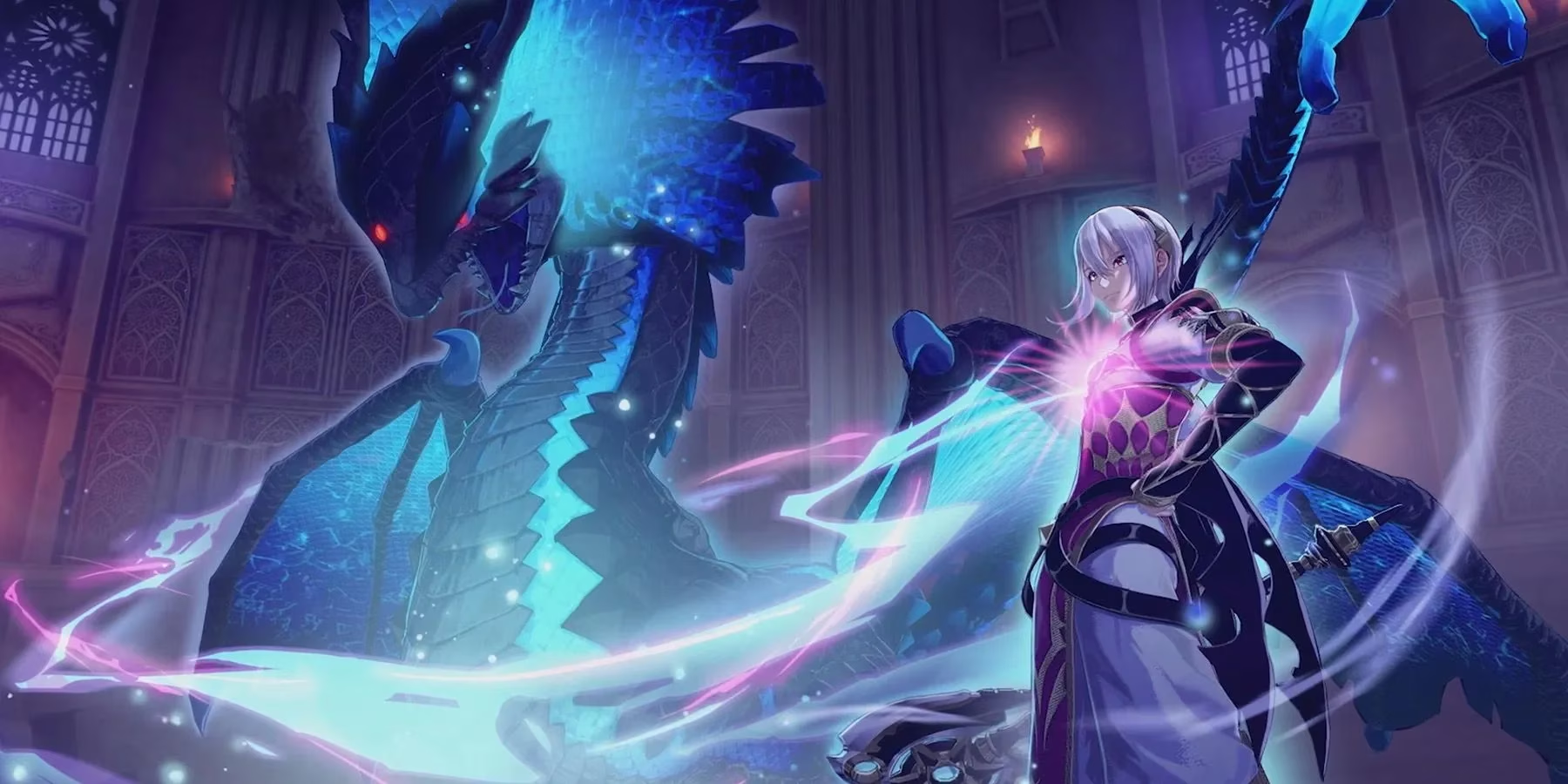
This decision, while perhaps dictated by narrative necessity, added another chapter to a long-running trend of lowering the stakes. To understand why the Fell Xenologue’s design raised eyebrows among veterans and hardcore loyalists, one must look back at how Fire Emblem’s relationship with permanent death has evolved. The original games offered no safety net: every skirmish carried the weight of irreversible consequences. Awakening in 2012 introduced Casual Mode to worldwide audiences, allowing fallen allies to retreat and return for the next battle. That alone was a seismic shift, dividing the fanbase between those who saw it as a welcome accessibility feature and those who felt it undercut the series’ strategic soul.
The accessibility push did not stop there. Fire Emblem Fates introduced Phoenix Mode, an ultra-forgiving setting where defeated units revived on the very next turn. Though optional, it signaled a philosophy of inclusion that increasingly marginalized the classic experience. Fire Emblem Echoes: Shadows of Valentia then gave players Mila's Turnwheel, a limited-use ability to rewind actions and undo fatal mistakes. This mechanic, reincarnated as Divine Pulse in Three Houses and Engage, effectively let players cheat death on their own terms. Each innovation eroded the absolutism of permadeath, but critically, they all remained choices. The Fell Xenologue DLC broke that pattern by imposing a no-permadeath rule on everyone.
According to official details released in 2023, units defeated in the Fell Xenologue simply return to the player's party at the end of every chapter. There is no Classic Mode toggle, no lingering consequences, not even the faint narrative acknowledgment of a loss. For a side story heavily focused on alternate realities, corrupted warriors, and cosmic stakes, the rationale likely lies in its lore. The base game saw numerous characters die and rise again as husklike Corrupted, and it is plausible that the DLC’s design intends to mirror that cyclic nature. Fallen allies might rejoin as Corrupted themselves, weaving player failures directly into the unfolding narrative rather than treating them as mere gameplay setbacks. This theory, while elegant, does little to soothe the hardcore demographic that has defined Fire Emblem’s identity for over three decades.
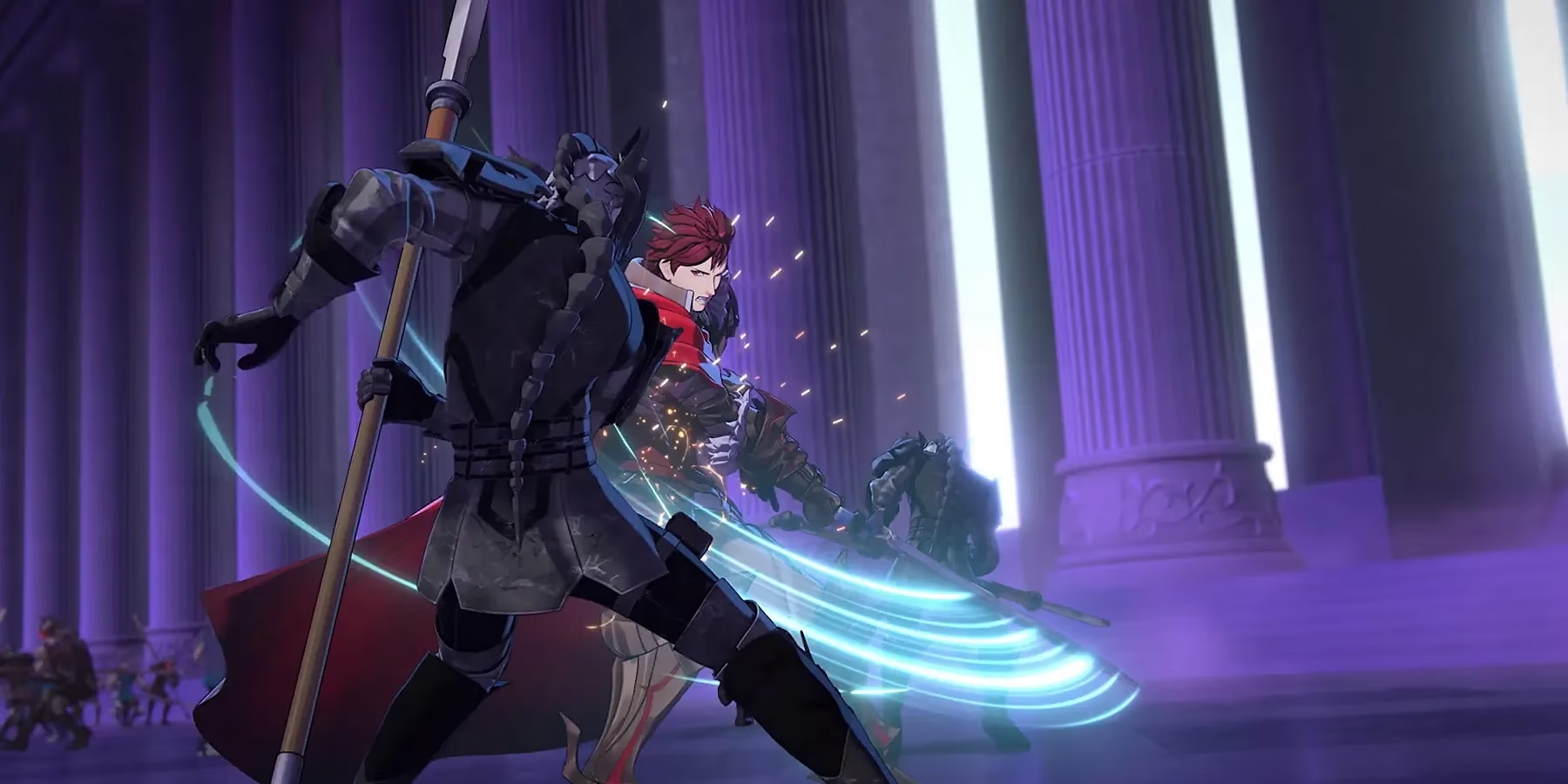
The Fell Xenologue’s approach is, in many ways, the logical endpoint of a trajectory that began with Awakening’s Casual Mode. By 2026, the strategy-RPG landscape has absorbed these lessons: accessibility sells, and the mainstream appetite for punishing mechanics has waned. Yet the permanent removal of permadeath in a paid DLC expansion feels particularly pointed. It suggests that even within the same game, the developers are willing to segment the experience, offering purists their Classic Mode main story while simultaneously corralling all players into a consequence-free zone for additional content. This dual-track philosophy may be the franchise’s future: a core campaign that accommodates multiple playstyles, surrounded by auxiliary stories that simplify the formula for broader appeal.
Of course, it is possible the Fell Xenologue will remain an outlier. Fire Emblem Engage itself still permits Classic Mode in its main adventure, and subsequent titles—whether remakes or brand-new entries released after 2023—have continued to include permadeath as an optional setting. The trend, however, is undeniable. Veteran fans who value the tension of permanent loss have watched the series steadily trade its ruthlessness for approachability, and each new installment raises the question: is the classic Fire Emblem experience destined to become a relic, preserved only in older cartridges and emulated roms? The Fell Xenologue may not have been the final nail, but it was certainly one of the loudest warnings.
Looking back from 2026, the DLC stands as a pivotal moment in this conversation. It highlighted how story integration can excuse mechanical simplification, and it forced the community to grapple with what truly makes a Fire Emblem game feel like Fire Emblem. While accessibility continues to bring in new legions of fans—many of whom might never have touched the series under the old rules—the heart of the franchise still beats to the rhythm of life-or-death decisions. As long as classic permadeath remains an option somewhere in each main title, that heart will survive, even if it pumps a little softer than it once did. For now, the Fell Xenologue serves as both a fascinating narrative experiment and a cautionary tale about how far a series can drift from its roots before something essential is lost.",
"title": "Fire Emblem Engage’s Fell Xenologue DLC Abandons Permadeath, Fueling Longtime Fan Concerns