
In the quiet hours after the final credits roll, when the last achievement chimes and the final boss lies defeated, a familiar stillness can settle over even the most vibrant digital realm. The once-bustling villages of life sims become routines, the sprawling landscapes of adventures feel fully charted, and the grand narratives reach their inevitable conclusion. Yet, for some worlds, this is not an end, but a transformation. A select group of developers have handed the keys of creation to their players, inviting them to become architects of their own adventures, ensuring the game's heart continues to beat long after the studio's final patch. This is the poetry of player-generated content in open worlds, a testament to the enduring power of community imagination.
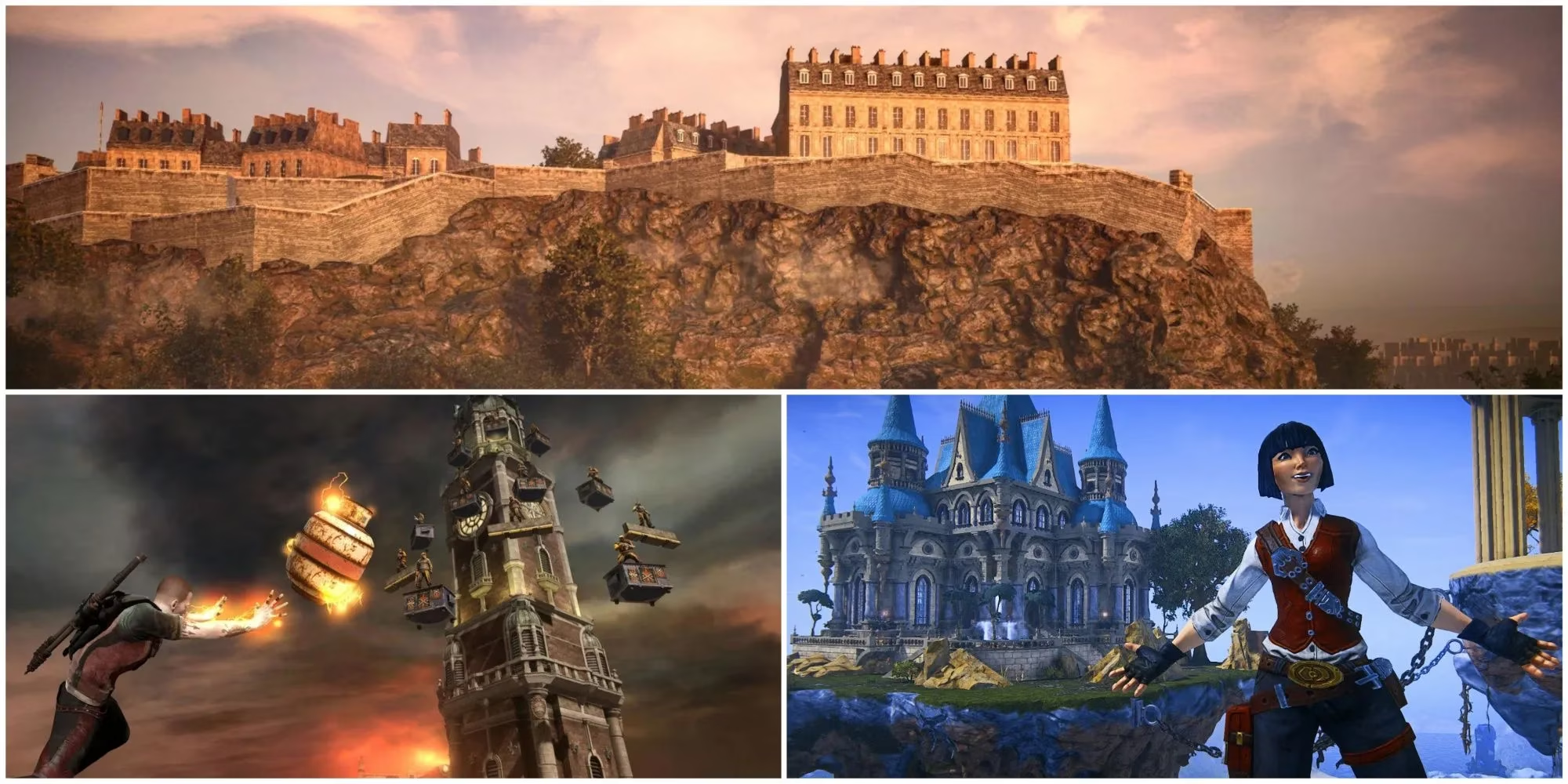
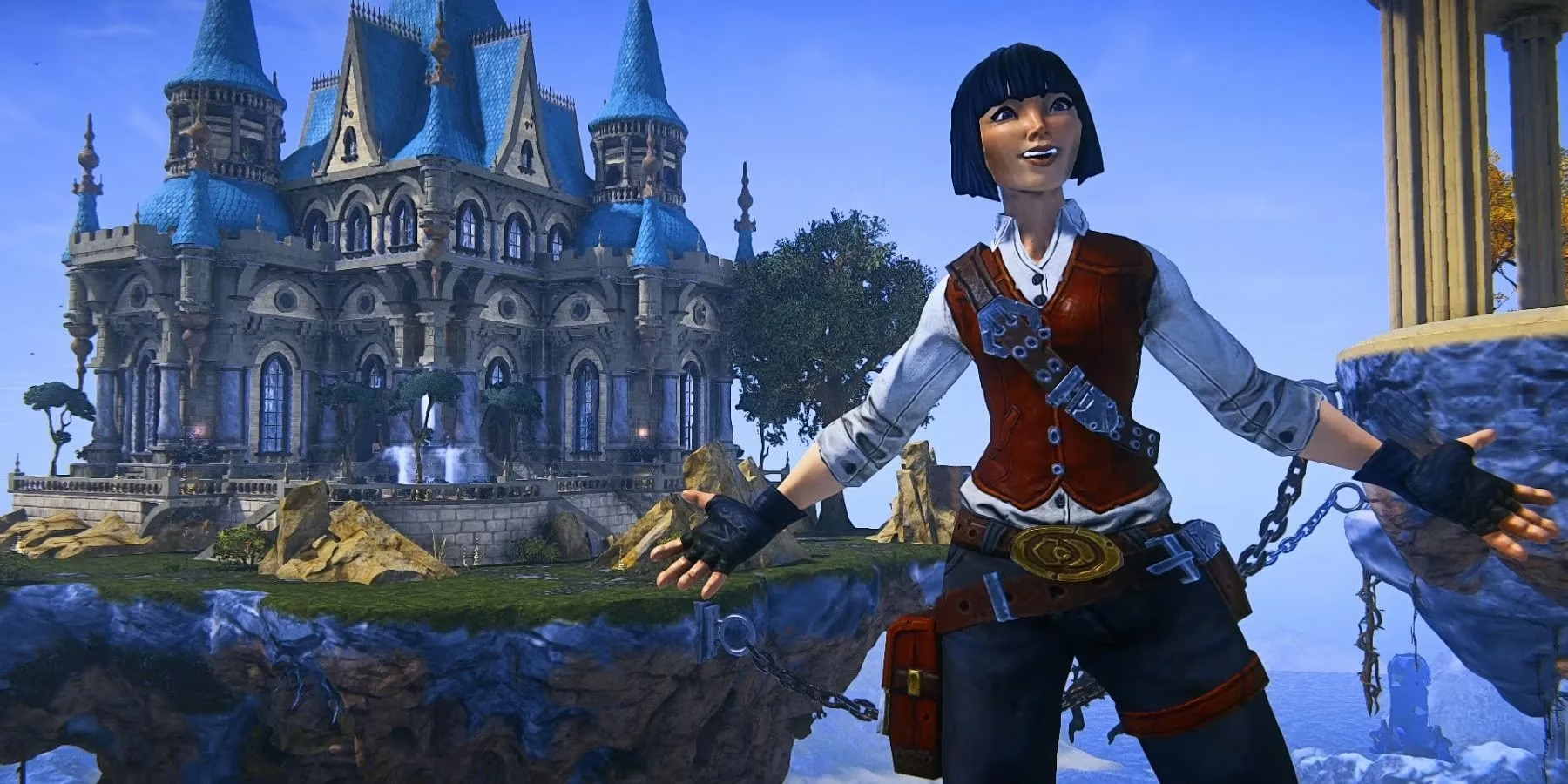
The dream of a world built entirely by its inhabitants was once epitomized by Landmark. Born from the ambitious ashes of EverQuest Next, it envisioned an MMORPG where the very earth and sky were clay in the players' hands. They could sculpt mountains, raise castles, and define the landmarks that would give the game its name. Daybreak Game Company fostered this creativity with competitions, turning the server into a gallery of collective imagination. It was a breathtaking vision—a true player's paradise. Yet, like many grand dreams, its time was tragically brief, its servers falling silent after a mere seven months, leaving behind whispers of what could have been. 🏰
In the rich, tapestry-like world of Rivellon, Divinity: Original Sin 2 offered a different kind of authorship. Beyond its deep, turn-based tactical combat and morally complex story lay the Game Master Mode. Here, a player could step into the role of a digital dungeon master, weaving entirely new campaigns for up to four adventurers. They could place treacherous dungeons, craft enigmatic NPCs with unique dialogue, and design quests that could be heroic, sinister, or absurd. It was a direct homage to the collaborative storytelling of tabletop Dungeons & Dragons, granting one player the power to shape a living, breathing narrative for others to unravel—or, if they were feeling mischievous, to completely derail.
Not all creations require epic fantasy. Sometimes, artistry is found in the perfect, silent elimination. The Hitman series, with its intricate sandbox levels, introduced Contracts Mode. This elegant system turned every location into a lethal playground for player design. An assassin could pinpoint up to five targets (expanded from three in the original iteration), set specific conditions—eliminate the target with a fish, while dressed as a clown—and publish their deadly puzzle for the world to solve. IO Interactive would curate the most ingenious and challenging contracts, featuring them on their website, turning the community into a relentless, creative agency of its own. 🎯
Ubisoft's Far Cry series has often been critiqued for a familiar formula, but Far Cry 5 broke the mold in one brilliant way with its Far Cry Arcade. This was not just a map editor; it was a cross-universe playground. Players could construct single-player missions, co-op adventures, or frantic deathmatches using assets not just from Montana, but from the neon-drenched future of Blood Dragon, the tropical piracy of Assassin's Creed: Black Flag, and the urban hacking of Watch Dogs. The creativity was staggering—players built everything from a towering Eiffel Tower to a painstaking recreation of Edinburgh. Its absence in Far Cry 6 was felt deeply, a vanished canvas that once held limitless potential.

Perhaps one of the most seamless integrations came from the electrically-charged streets of New Marais in inFamous 2. Here, user-generated content (UGC) wasn't a separate mode; it was woven into the fabric of the city itself, marked by glowing green icons. As conduit Cole MacGrath, players could stumble upon these community-made missions organically. The tools allowed for deep customization: terrain manipulation, objective scripting, and even writing custom dialogue for NPCs to tell miniature stories. The standalone Festival of Blood expanded this further, adding comic-book style cutscene creators. Remarkably, over a decade after its release, this ecosystem of player stories persists, a living archive of creativity, though one that now exists on borrowed time as Sucker Punch's servers await their eventual sunset.
A Legacy of Player-Made Worlds:
| Game | Creation Tool | Core Concept | Legacy Status |
|---|---|---|---|
| Landmark | World & Landmark Builder | Player-constructed MMORPG world | Servers Closed (2016) |
| Divinity: Original Sin 2 | Game Master Mode | Tabletop-style campaign creation | Active & Supported |
| Hitman: World of Assassination | Contracts Mode | Player-designed assassination puzzles | Active & Curated |
| Far Cry 5 | Far Cry Arcade | Cross-franchise map & mission editor | Discontinued in sequels |
| inFamous 2 | UGC Mission Editor | In-world, story-driven mission creation | Active, but on legacy servers |
These games represent a beautiful paradox. They are finite products that strive for infinity. By offering tools—the mission maker, the quest editor, the world-shaper—developers acknowledge that the most untapped resource is not in their code, but in the collective imagination of their players. The story doesn't have to end when the developer's pen is put down. It can continue in a thousand different directions, written by a thousand different authors, in worlds that are never truly finished, only endlessly remade. In 2025, this philosophy stands as a beacon for the future of interactive entertainment, where the most memorable quest might be one you design for a stranger, and the final boss is the limit of your own creativity. 🌄