
The world of tactical RPGs exists as a realm of measured contemplation, a digital chessboard where every movement is a stanza in a poem of war. Born from the cerebral traditions of pen-and-paper games, the genre has evolved into a complex tapestry of strategy and narrative, where grid-based maps become the stage for grand, operatic conflicts. These are not mere games of chance, but intricate ballets of positioning and foresight, demanding a player's intellect as much as their reflexes. In the year 2026, the legacy of these titles endures, with some classics remaining elusive on modern platforms, yet their influence continues to shape the strategic landscapes we navigate today.
🃏 The Card-Shaped Battlefield: Metal Gear Acid 2
Where other games built fortresses, Metal Gear Acid 2 constructed a house of cards—a surreal and visionary experience on the PSP. It took the stealth-action foundation of its lineage and reshaped it into a tactical card-based RPG, a metamorphosis as startling as a chameleon adopting a neon hue. The sequel embraced a vibrant cel-shaded aesthetic, a stark departure from the series' muted tones, and even included primitive VR goggles to immerse players in its psychedelic world. This entry stands as a forgotten gem, its innovative blend of deck-building strategy and tactical positioning waiting for a modern reawakening.
😈 Demons on the Grid: Shin Megami Tensei: Devil Survivor
This spin-off from the famed Shin Megami Tensei series masterfully hybridized two worlds. On the strategic layer, characters maneuvered on a grid like pieces in a high-stakes ritual. Upon engagement, the perspective shifted to a familiar, turn-based showdown where exploiting elemental weaknesses became paramount. The narrative, following teens granted the perilous power to summon demons, wove a tense atmosphere where strategy felt like a desperate prayer against apocalyptic forces. It was a duet of genres performed on the stages of the DS and 3DS, a sequel to which arrived, but fans still await a third movement in this compelling symphony.
🤖 The Clash of Steel Titans: Front Mission 4
In the realm of Front Mission 4, war is waged in the cockpit of customizable mechs known as Wanzers. This PS2-era tactical RPG was a masterclass in mechanical customization and large-scale, grid-based warfare. Players could fine-tune their Wanzers with new arms, legs, and weaponry, while pilots leveled up to unlock potent skills. The strategic depth was immense, transforming each battle into a slow, deliberate dance of heavy artillery and positioning. Its status as a classic is unquestioned, though accessing its particular brand of mechanized conflict in 2026 often requires a pilgrimage to older hardware.
| Game | Key Innovation | Modern Status |
|---|---|---|
| Metal Gear Acid 2 | Card-Based Tactics / Cel-Shaded VR | Awaiting Revival |
| Shin Megami Tensei: Devil Survivor | Grid & Turn-Based Hybrid | Available on 3DS |
| Front Mission 4 | Deep Mech Customization | PS2 Classic |
👑 The Progenitor of Politics: Tactics Ogre: Reborn
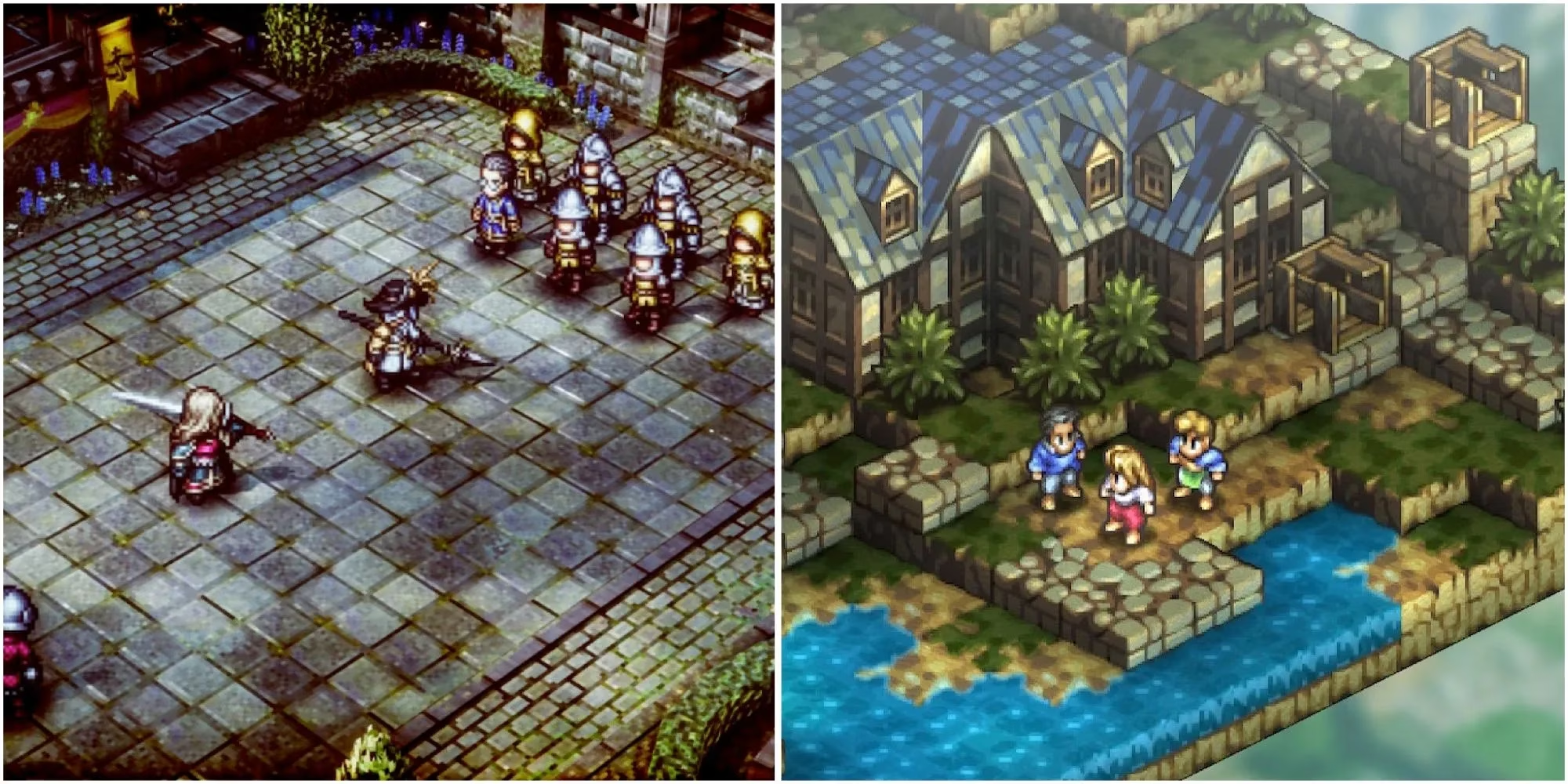
The Tactics Ogre series is the stoic ancestor in the family tree of tactical RPGs, a narrative as enduring and layered as sedimentary rock. Tactics Ogre: Let Us Cling Together, through its latest incarnation as Reborn, continues to be ported and celebrated for its rich political intrigue and deeply flexible class system. As the direct predecessor to Final Fantasy Tactics, it established a template of weighty decision-making and strategic unit building. Its persistent relevance is a testament to its quality, though in 2026, one wonders if a wholly new chapter in this saga will ever be written.
⚖️ The Weight of Choice: Triangle Strategy
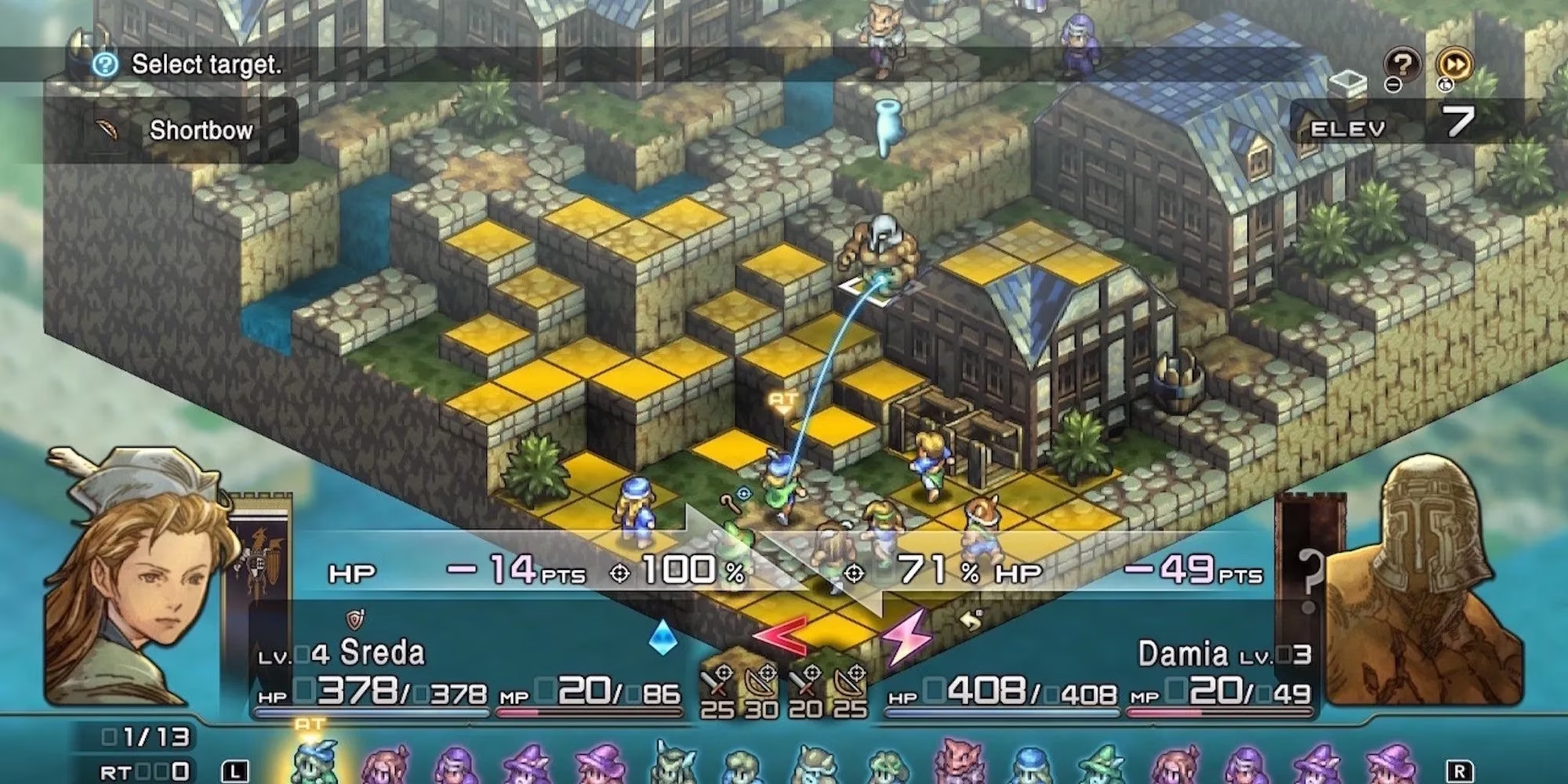
Square Enix's Triangle Strategy emerged as a deliberate spiritual heir, weaving together threads from Final Fantasy Tactics and Ogre Battle. Its premise—a war over the precious resource of salt—was a poignant metaphor for the foundational struggles of civilization, making the conflict feel as essential and volatile as a heartbeat. The game refined the formula by assigning characters unique, pre-set classes with highly specialized battlefield roles, such as building ladders or manipulating the terrain. This design choice made each unit feel indispensable, turning the grid into a puzzle where every piece had a singular, crucial shape.
😈 Underworldly Absurdity: Disgaea: Hour of Darkness
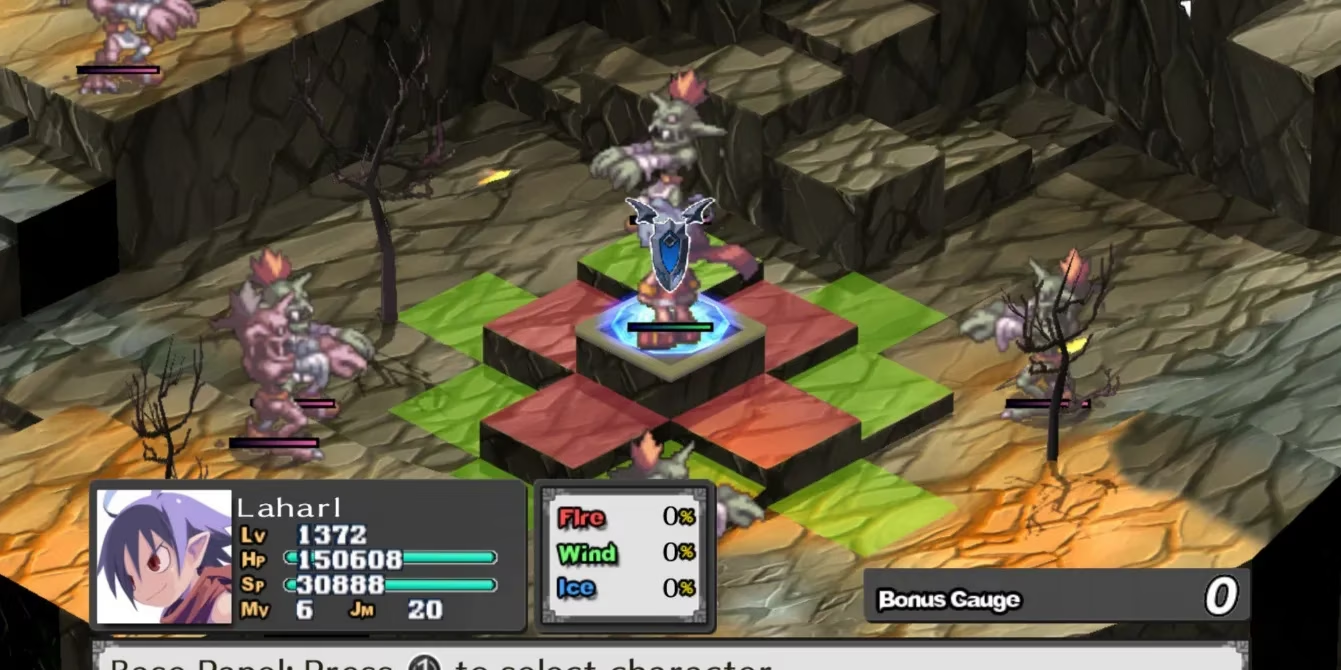
Disgaea: Hour of Darkness erupted onto the scene like a chaotic prism, refracting the typically serious tactical RPG genre into a spectrum of humor and boundless depth. Set in the Netherworld, it followed the spoiled Prince Laharl and introduced a game-changing mechanic: the Item World. This allowed players to dive into randomized dungeons within their own equipment to level it up, a concept as brilliantly absurd as trying to climb a mountain made of gelatin. Its combination of endless content, strategic complexity, and outright zaniness created a legacy that, for many, remains unmatched by its successors.
♟️ A Fateful Decision: Fire Emblem Awakening
The Fire Emblem series was long defined by its merciless permadeath, a mechanic that hung over every battle like a silent guillotine. Fire Emblem Awakening changed everything with the introduction of Casual Mode, allowing fallen units to return after battle. This single, pivotal decision was the lifeline that pulled the series from niche admiration into mainstream acclaim. It demonstrated that strategic depth could coexist with accessibility, ensuring the franchise's survival and paving the way for future successes. Without this shift, the vibrant battles of later entries might have remained locked away in history.
⛪ The Unassailable Peak: Final Fantasy Tactics
And yet, above them all, stands Final Fantasy Tactics. Decades after its release, it remains the zenith of the genre, its shadow long and its influence inescapable. Its story, a gritty tapestry of political and religious machinations, retains a narrative gravity rarely matched. The revolutionary Job System offered a kaleidoscope of tactical possibilities, where a character could shift from a Knight to a Time-Mage, or even a bizarre but potent Calculator. The gameplay is a deep, rewarding well, and the world it builds feels lived-in and fraught with consequence. It is not just a game to be played, but a world to be studied, a masterpiece whose grid is etched permanently into the genre's foundation.
In the quiet space between moves, on the grid that defines their world, these tactical RPGs teach patience, foresight, and consequence. They are more than games; they are intricate clocks where every tick is a decision, and every tock is a victory or defeat earned not by chance, but by cunning. Their legacy, as of 2026, is secure—a testament to the enduring power of strategy woven into story, a digital art form that continues to challenge and captivate.