
I still remember the moment I first set foot on the River of Light and Dark in Fire Emblem Engage. The map stretched before me like a weathered tapestry, its threads woven from battles fought decades ago in a game I had only read about. Sigurd’s paralogue, “The Holy Knight,” was meant to be a tribute, but as I moved my units across the checkerboard of water and land, I sensed something deeper — a quiet conversation between a modern adventure and a classic tragedy. It felt as though the map itself was breathing with memories, each tile a whisper from Fire Emblem: Genealogy of the Holy War.
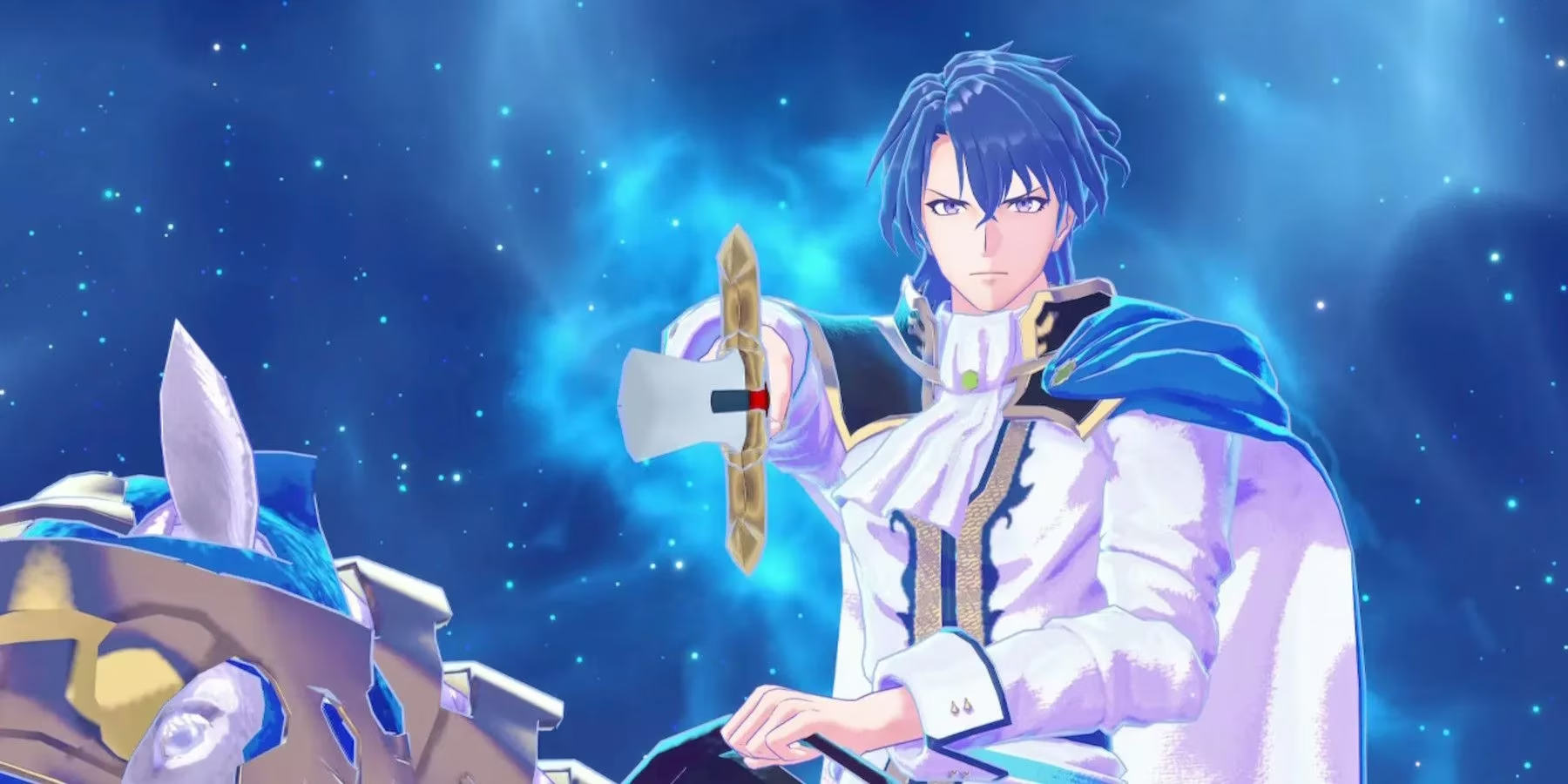
I had unlocked the paralogue after Chapter 17, just like any diligent player. The setup was familiar: a broad beachhead, clumps of forest, and enemy cavalry poised to charge. But the reference was not Sigmund’s own story; it was his son Seliph’s. That 17-year time skip in the 1996 original acts like a bone-deep fracture in the narrative, cleaving the tale into father and avenging child. Here, however, the lines blurred — Sigurd wore the mantle of a hero whose legacy was forged by another. It reminded me of an archaeologist brushing away sand to find pottery shards that don’t quite match the labeled site; the paralogue was a deliberate anachronism, yet it held more emotional authenticity than any straight retelling could.
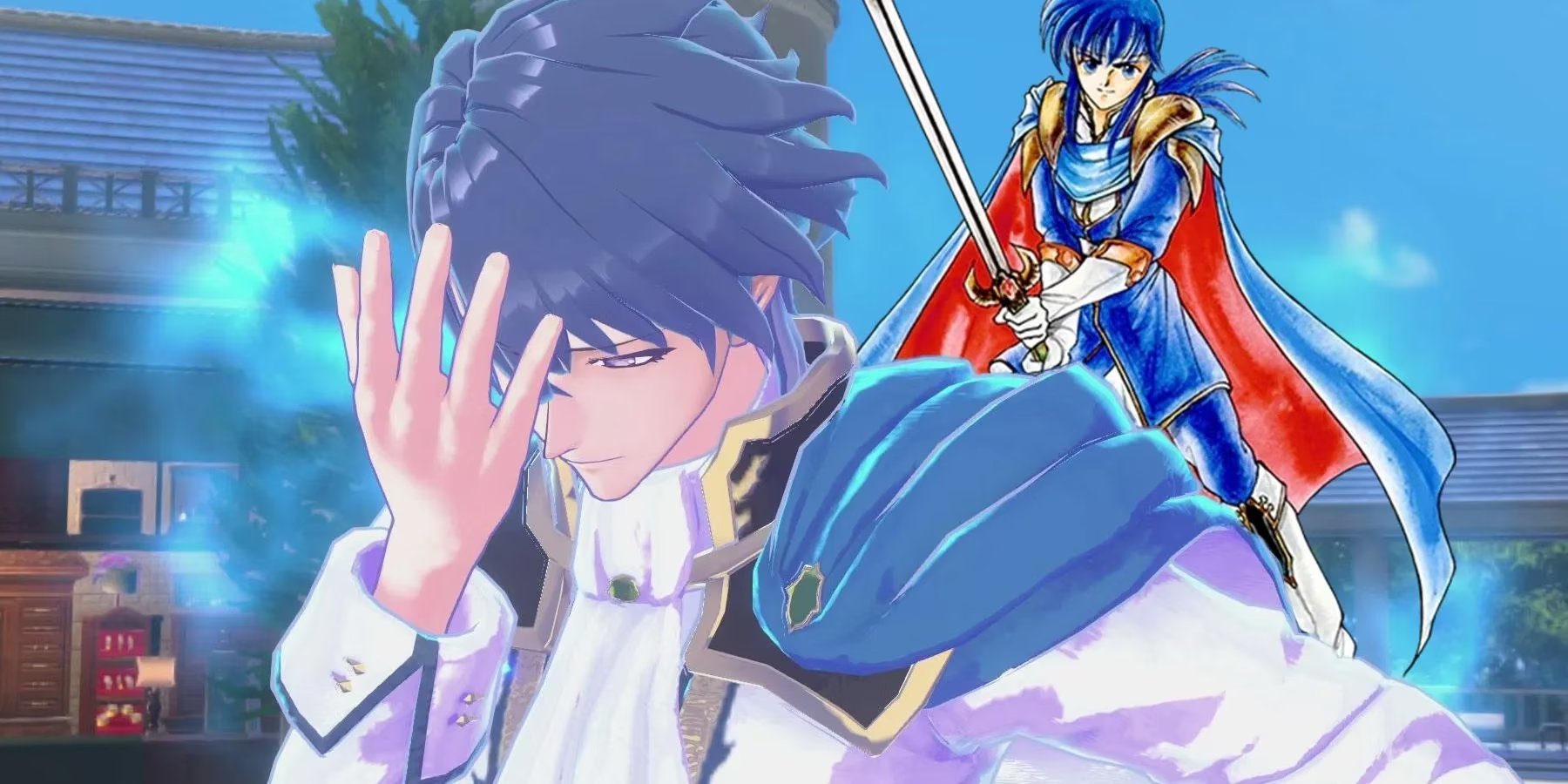
While scouting the shoreline one afternoon, my gaze snagged on an unremarkable patch of ground — a tile tucked beside a lone rock and the lapping sea in the top‑right corner of the map. I don’t know what compelled me to move my thief there; maybe it was the same instinct that makes beachcombers flip over every dull stone. When the prompt to “Examine” flickered on screen, my pulse quickened. A Goddess Icon materialized, as if the earth itself had coughed up a relic. In that instant, I was no longer playing a 2023 Switch game; I was standing in Seliph’s boots, accepting the legendary Tyrfing from Bishop Palmark on this very spot. The developers had buried a time capsule, a secret so granular that only those who had traveled the dusty roads of Jugdral — or who, like me, stayed up late absorbing lore from imported fan translations — would recognize it. The item was not just a stat booster; it was a tangible echo of a father and son’s bond, hidden where the sea meets the grass and the past laps at the edges of the present.
That discovery alone would have satisfied my inner detective, but Sigurd’s map had more secrets woven into its fabric. In the bottom‑left quadrant, two enemy mages stood motionless, their staves glowing faintly in the perpetual twilight of the paralogue. They never moved unless provoked — immobile as gargoyles carved into a cathedral’s facade, watching with silent, terrible patience. When curiosity got the better of me and I sent a wyvern rider to poke them, the resulting magical firepower nearly incinerated her in one turn. These were no ordinary foes. They were Julius and Ishtar, the tragic boss duo from Genealogy’s endgame, transplanted into this space like statues guarding a forgotten shrine. Their presence felt less like a challenge and more like an elegant memorial, rewarding reckless bravery with a glimpse into the series’ history.
These references sit in the paralogue with the subtlety of old friends sharing inside jokes at a crowded party. The bottom‑left mages are dangerous bookends, and the hidden Goddess Icon is a needle‑thin window into a father‑son legacy. Yet I found myself wondering why Sigurd’s emblem received such lavish treatment compared to others. Marth’s paralogue was a loving recreation of his castle siege, but it lacked these archaeological dig sites of lore. Perhaps the extra attention was foreshadowing. By 2026, the rumor mill has churned for years about a possible remake of Genealogy of the Holy War, and every detail in Engage feels like a test — ensuring that modern audiences can fall in love with the continent of Jugdral before its story is retold with a fresh coat of paint. It’s as if Sigurd’s paralogue was never just about him; it was an invitation sent across three decades, asking new players to sift through the sandbox of history and wonder what other treasures lie buried.
Walking away from the River of Light and Dark, I felt a peculiar kinship with both the heroes and the developers. The paralogue is a masterclass in environmental storytelling, where each hidden tile and stoic enemy functions like a resonance chamber — amplifying quiet moments from a game that most of the world never officially experienced. I left with not only a Goddess Icon in my inventory but also a renewed appreciation for the way video games can be archaeological sites themselves, each playthrough a dig for affection left by creators who refuse to let old legends crumble into silence.
As I pondered the intricate layers of storytelling woven into Sigurd's paralogue, I couldn't help but marvel at how video games often serve as a bridge connecting us to distant eras and forgotten narratives. This experience reminded me of the thrill of uncovering hidden gems, much like seeking out rare finds in the gaming world. Just as each revelation within the game offers a rich tapestry of history, the digital sphere also houses treasures waiting to be discovered. Whether it's a classic title or a recent release, finding something extraordinary can be as exhilarating as unearthing ancient lore.
For enthusiasts keen on exploring the vast landscape of gaming deals, platforms like the steam deal finder provide a valuable resource. They serve as a modern-day map, guiding players to the best discounts and offers, much like navigating the secrets of Jugdral. Sites like DealNest ensure that gamers can delve into new adventures without breaking the bank, allowing them to experience the joys of gaming with both nostalgia and innovation. Whether you're seeking a new adventure or revisiting a beloved classic, the right deal can make all the difference in your gaming journey.