
In the vast, luminous expanse of digital realms, my gaze often settles, not from the intimate eye of a protagonist or the lofty perch of an omniscient god, but from a singular, slanted angle—the isometric view. It is a perspective of elegant geometry, a window into worlds where every shadow is deliberate, every pixel a brushstroke in a grand, dioramic masterpiece. As the years have unfurled, leading us into 2026, the gaming landscape has grown ever more expansive, with vistas stretching to photorealistic horizons. Yet, the quiet allure of the isometric world has not dimmed; it has matured, becoming a sanctuary for depth, for tactical thought, and for stories that unfold like intricate clockwork. It is a view that does not merely show a world but frames it, turning landscapes into living blueprints of adventure.
🗺️ The Timeless Blueprint of Adventure
The isometric perspective is more than a camera angle; it is a narrative device, a design philosophy. It gifts the player a godlike overview while maintaining a tangible, almost tactile connection to the terrain. We see the rust on a corrugated roof, the cracks in ancient cobblestones, and the glow of a distant campfire, all within the context of a sprawling, navigable map. This unique vantage point fosters a sense of strategic ownership. We are not just passing through these worlds; we are surveying them, planning our route through their arteries, understanding their geography as both a playground and a puzzle.
❄️ Frozen Wastes and Moral Crossroads: Wasteland 3
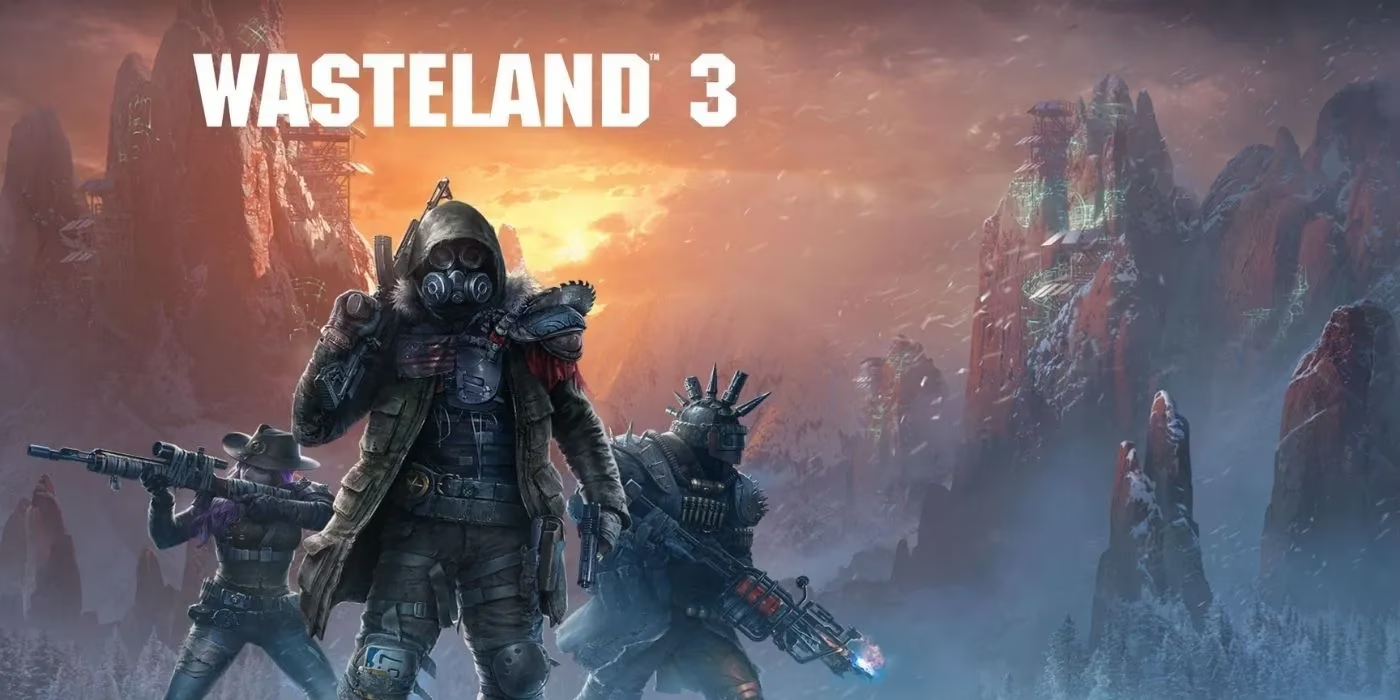
My journey into the frostbitten heart of Colorado in Wasteland 3 was a lesson in consequence. The isometric view here felt like examining a fragile, snow-globe society on the brink of shattering. As a Ranger, every choice resonated across the icy plains. The view allowed me to witness the ripple effects of my decisions—seeing a settlement thrive or wither based on a single dialogue tree. It transformed the desolate, open world from a mere backdrop into a character itself, its frozen silence echoing the moral chill of the choices before me.
🌑 A Dark Pilgrimage: The Endless Echo of Path of Exile
To call Path of Exile merely a game feels insufficient; it is a pilgrimage through a gothic cathedral of skill trees and eldritch lore. While its world is segmented, each zone feels like a meticulously crafted diorama of despair and grandeur. The isometric lens focuses the chaos, letting me appreciate the brutal ballet of combat and the intricate, interlocking pathways of its legendary passive skill gem system. It is a world designed not just to be seen, but to be mastered, its depth laid bare from this quintessential angle.
 -Cropped-(1).jpg)
🏰 Of Wizards and Legacy: The Immortal Tapestry of Baldur's Gate II
Stepping into the Forgotten Realms through Baldur's Gate II was like unfolding a legendary tapestry. The isometric view framed the Sword Coast not as a mere setting, but as a living, breathing stage for epic poetry. Managing a party of six from this vantage felt like conducting a symphony of steel and spell. I could pause the world, issue commands with the precision of a general, and watch the glorious, chaotic aftermath unfold. It cemented the idea that the greatest open worlds are not always the largest, but the most densely woven with story and possibility.
☢️ Foundations of a Genre: The Gritty Soul of Fallout 2
Returning to the irradiated wastes of Fallout 2 is a homecoming to the roots of role-playing itself. The grainy, isometric perspective is not a limitation but an aesthetic, coating the 23rd century in a layer of timeless grit. It allowed the game's dark humor and profound player agency to take center stage. From this angle, the world felt tangible—a chessboard of decaying towns, mutant threats, and moral dilemmas where every interaction, every stolen trinket, could alter the fate of nations. It is the blueprint from which so many modern narratives were cut.
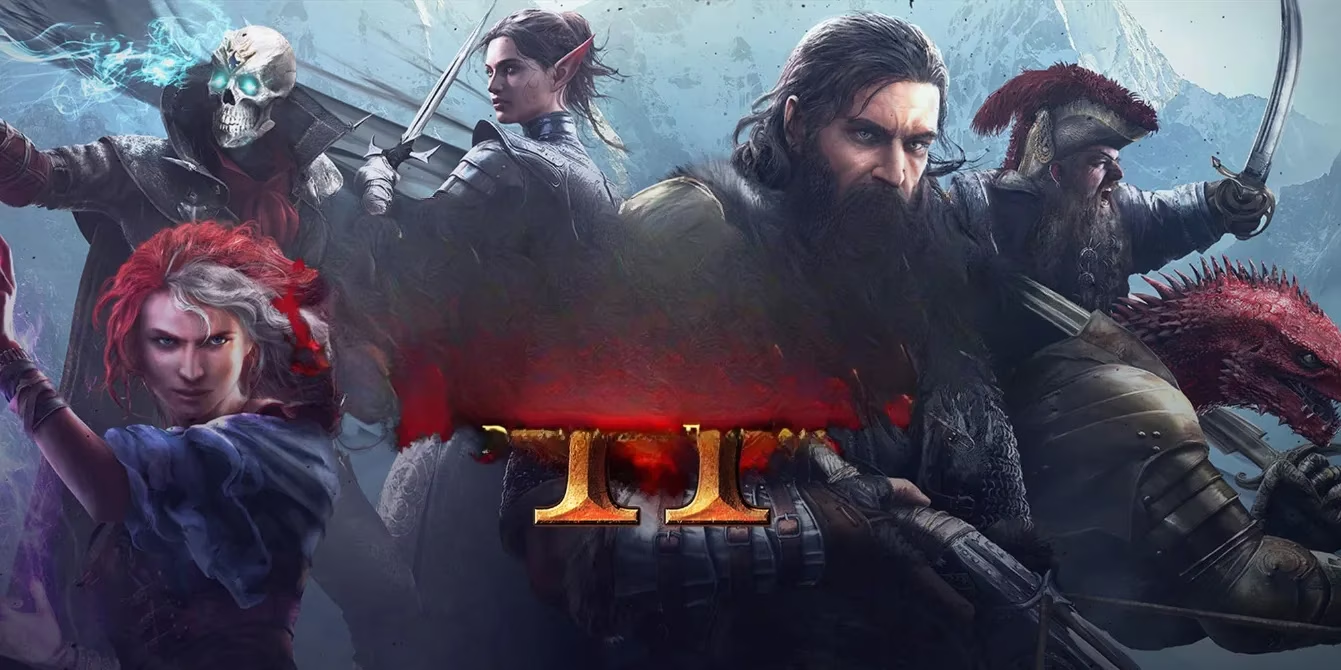
✨ A Canvas of Divinity and Choice: Divinity: Original Sin 2
Rivellon, in Divinity: Original Sin 2, is perhaps the purest expression of what an isometric open world can be: a systemic playground. The view is essential, for it reveals the elemental chessboard. I see the puddle of water that can be electrified, the cloud of poison that can be ignited, the high ground that offers tactical advantage. It turns the environment into an active participant in every encounter. The world is not just open; it is interactive, malleable, and deeply responsive to the godlike powers—and moral choices—of the player.

⚡ A Mythological Roguelike: The Stylized Underworld of Hades
Hades proves that an isometric world need not be sprawling to feel boundless. The shifting chambers of the Underworld are a masterclass in stylized design, each room a self-contained arena of exquisite combat. The perspective perfectly captures the fluid, darting movements of Zagreus and the beautiful, screen-filling chaos of divine abilities. It frames the eternal struggle not as a grim slog, but as a vibrant, painterly dance—a personal odyssey reflected in every run, every relationship, and every perfectly dodge.
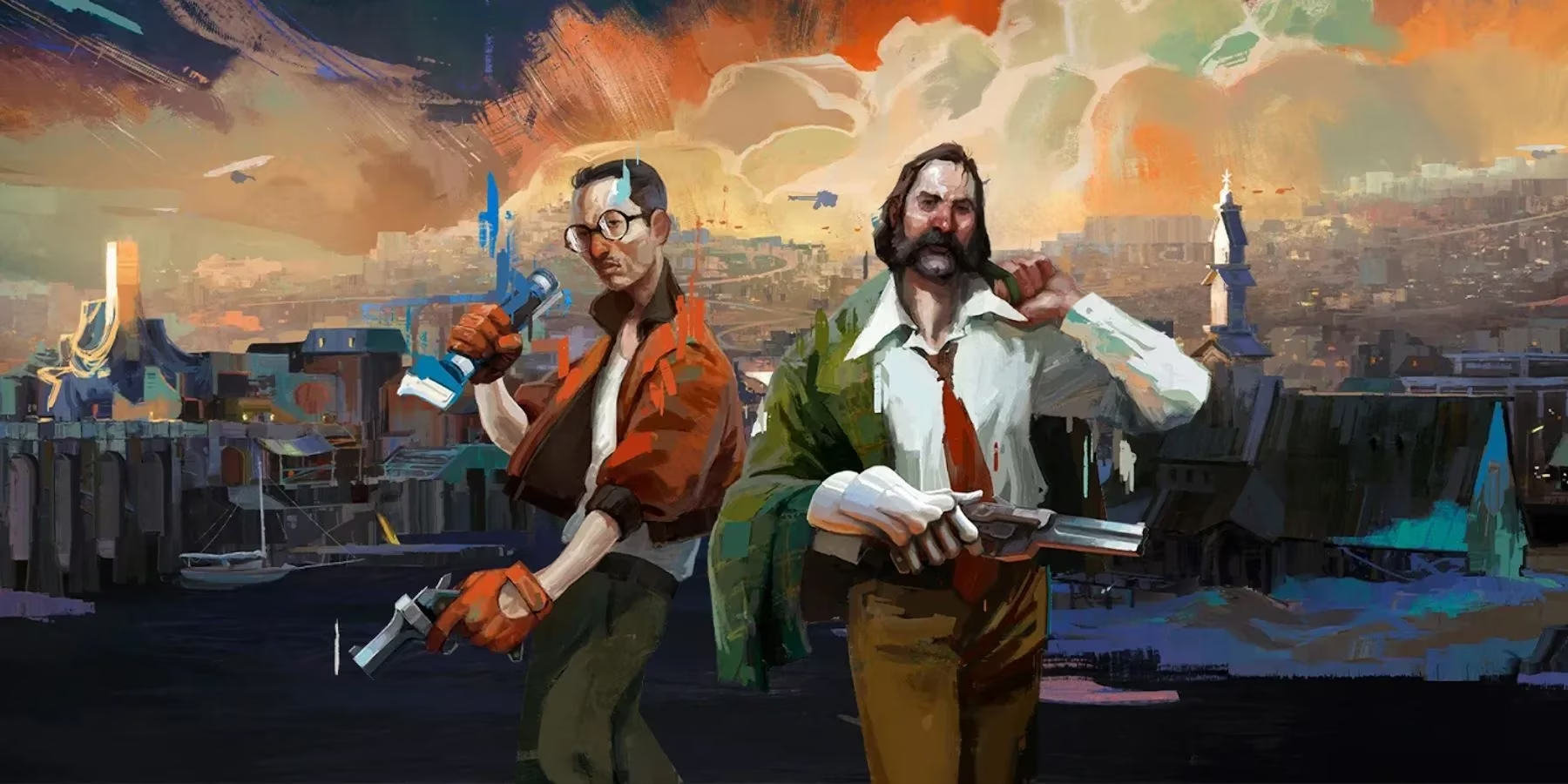
🕵️♂️ The Mind as an Open World: The Psychological Landscape of Disco Elysium
Finally, Disco Elysium redefined what an isometric open world could contain. Its greatest expanse is not the rain-soaked streets of Revachol, but the shattered psyche of its detective. The world from above becomes a crime scene, a social web, a map of ideological ruin. The isometric view creates a critical distance, allowing me to observe the detective's stumbling progress and the city's decaying grandeur with a dual sense of empathy and analysis. It is a world built not on geography alone, but on the treacherous, open terrain of memory, politics, and human failure.
🎭 The Unifying Thread: Why This View Endures
As I reflect on these journeys, the common thread is clear. The isometric view is a covenant of clarity and complexity. It presents a world that is immediately readable yet endlessly deep. In an age of overwhelming sensory immersion, it offers the quiet pleasure of contemplation. It says: here is the world in all its interconnected glory. Plan your route, weigh your choices, and watch your story etch itself into the landscape. These are not just games; they are models of possibility, dioramas of destiny, and in 2026, their slanted, beautiful perspective remains a vital and poetic way to see.