
A few years have passed since I first set foot on the floating Somniel and watched Alear awaken as the Divine Dragon. Yet even in 2026, I find myself returning to the lore of Fire Emblem Engage, still pondering the nature of those twelve glittering bands that shaped every battle and bond. The Emblem Rings were marketed as a nostalgic celebration of the series’ past—and mechanically, they delivered brilliantly. But every time I revisit the story, I’m struck by the same lingering questions that the final chapters only half-answered.
At the core of Elyos’ worldbuilding lies a simple yet compelling concept: twelve Emblem Rings, each housing the memory and spirit of a legendary hero from across the Fire Emblem multiverse. Marth, Celica, Sigurd, Leif, Roy, Lyn, Eirika, Ike, Micaiah, Lucina, Corrin, and Byleth—those names alone stir my heart. They aren’t the real heroes, but constructs aware of their own detachment. Divine Dragons can invoke “pure” versions of these Emblems through prayer, whereas the Fell Dragon Sombron twists them into mute, unfeeling tools. This duality worked beautifully as a premise for gameplay and character development. I watched Alear learn kindness from Celica, protection from Ike, and unyielding hope from Lucina. Each ring wasn’t just a weapon; it was a mentor.
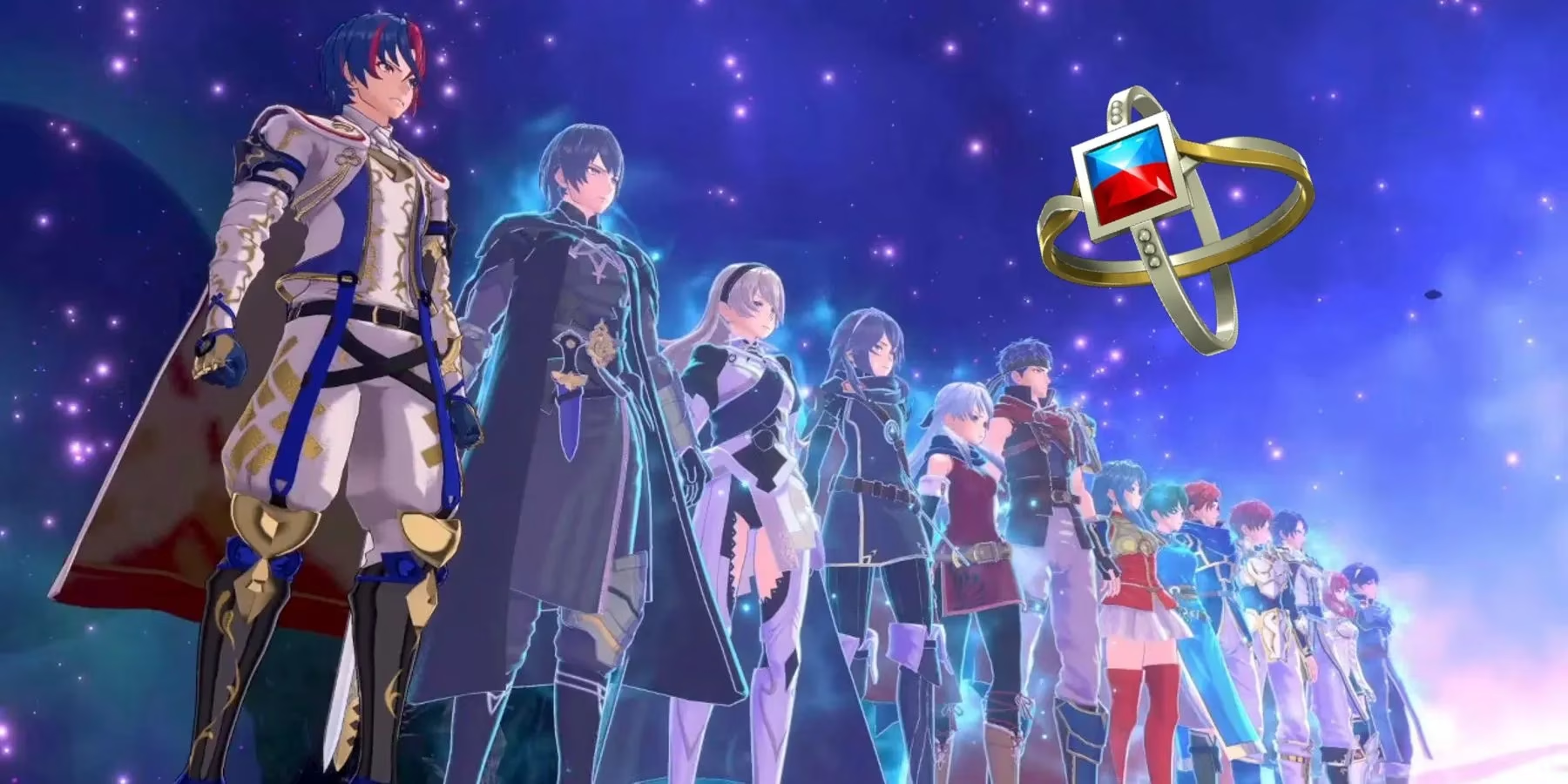
But when the third act arrived, everything I thought I understood about these rings started to blur. After Sombron absorbs the power of all twelve Emblem Rings, Alear dies protecting their sister Veyle—and then things get weird in the best yet most confusing way. Veyle brings Alear back momentarily as a Corrupted, but the twelve Emblems collectively perform a “Miracle,” a once-in-a-lifetime blessing that transforms Alear into the 13th Emblem: the Fire Emblem itself. This twist moved me to tears, but it also planted a seed of doubt. How can Alear be both the original living Divine Dragon and a corporeal Emblem at the same time? The game tells us Emblems are memory constructs disconnected from their source worlds, yet Alear bluntly defies that rule. They walk the Somniel, eat meals (even if Emblems can only smell, not taste), and engage in relationships just like before. The Ring of the Connector apparently lets Alear split their spirit with allies, a mechanic that feels poetic yet logically inconsistent when placed against the earlier lore.
Even more perplexing is the origin of the Emblem Rings themselves. The narrative heavily implies that these rings are manifestations of heroic archetypes from parallel universes—a clean, multiversal handwave that serves the crossover appeal. Marth’s ring comes from his world’s legend, Celica’s from hers, and so on. But if those emblems were just disconnected memories, why could they perform a genuine Miracle that permanently altered reality? Why did the original twelve rings dissolve after the final battle, their forms unable to exist outside Elyos’ dimension, while Alear—now an Emblem—remains stable for a long, prosperous reign? The game never clarifies whether Alear’s ring is truly different or if the “Connector” nature simply bends the rules. As a fan, I can’t help but ask: did Alear’s bonds break the system, or was the system always designed to produce a living Emblem under the right conditions?
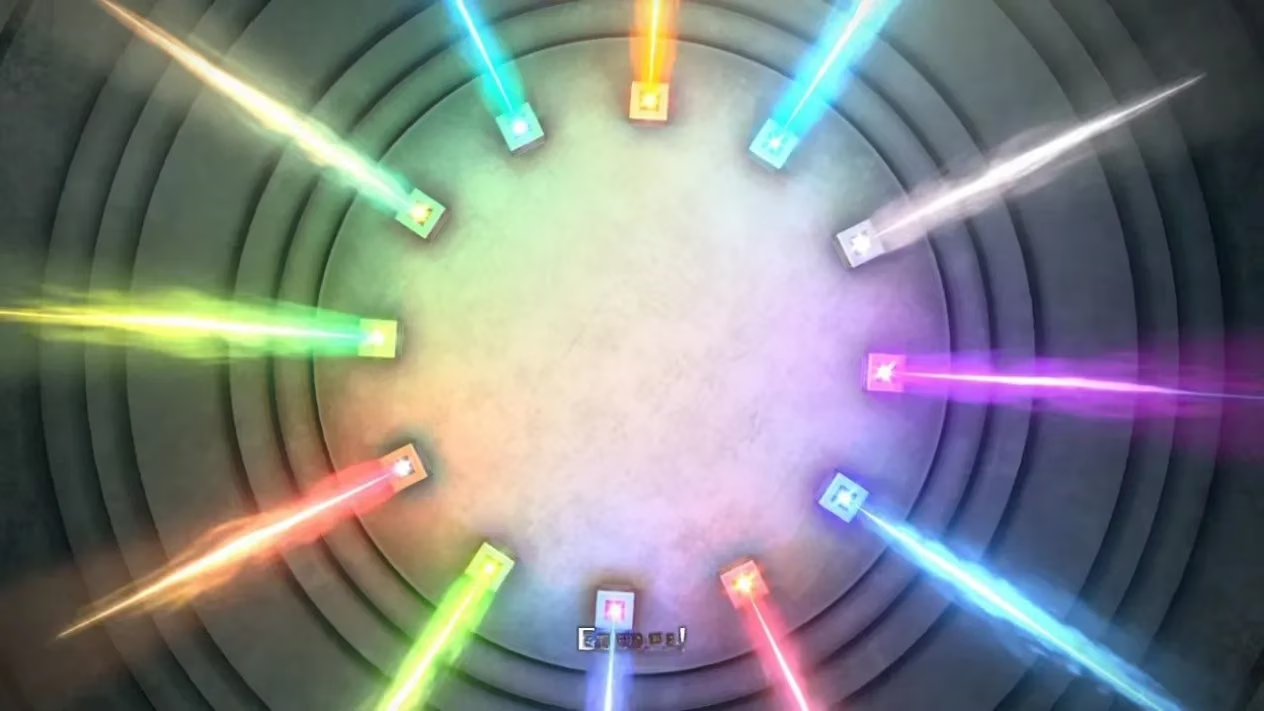
Let’s not forget the Dark Emblems introduced in the final battle—a line-up of terrifying final bosses from the series’ history, summoned by Sombron in a space between dimensions. He speaks of countless universes, even flaunts a mysterious “Zero Emblem” from some unknown realm. This opens up a fascinating box of possibilities. If villains can become Emblems through Fell Dragon invocation, could a Dark Emblem ever choose redemption and gain free will? Could a Corrupted-like being become a permanent ally, much like what happened to Alear? The lore tantalizes us with these ideas, only to sprint past them as Alear delivers the final blow.
I admire what Intelligent Systems attempted on an emotional level: a narrative about bonds triumphing over isolation, with Alear embodying the power of connection. The moment when all twelve Emblems surround Alear and bestow their blessing is genuinely stirring. But emotionally charged moments don’t excuse muddy worldbuilding, especially when the entire gameplay loop hinges on the Emblems’ nature. We spend dozens of hours mastering Engage skills, building supports, and unlocking Paralogue maps that explore each lord’s past. When the rules suddenly bend for the protagonist, it cheapens the consistency I craved.
Admittedly, one can simply chalk this up to a classic anime trope—the hero transcending normal limits through friendship. And on a thematic level, that’s exactly what happens. Alear forges bonds while Sombron strives to stand alone, so of course the Fire Emblem arises from unity. But the more I think about it, the more I wish the game had given me concrete answers. Did the twelve Emblems merely tap into a fundamental cosmic law that creates a living Emblem when a soul’s connections reach a certain threshold? Or is Alear’s transformation a one-off fluke caused by the collective Miracle? Without a clear explanation, the setting feels like it’s held together by emotional glue rather than sturdy lore.
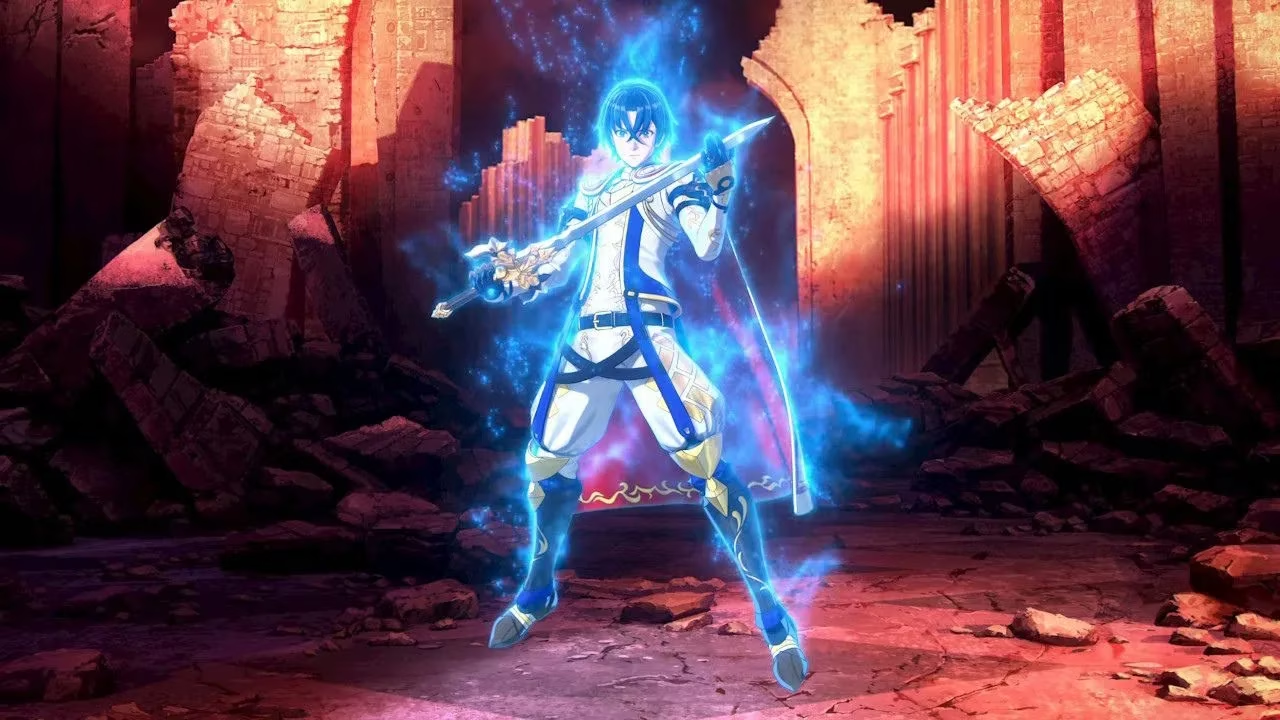
Even now, in 2026, I find myself scouring forums and replaying cutscenes for clues. The DLC Emblems—Tiki, Soren, and others—add more flavor but still sidestep the main puzzle. Perhaps the ambiguity is intentional, leaving room for future titles to explore the true nature of Emblem Rings. If that’s the case, I’ll wait with bated breath. But as a lover of Fire Emblem’s deep lore, I can’t help but feel a pang of disappointment that the very foundation of Engage’s identity remains shrouded in so many questions. The Emblems deserved a resolution as solid as the bonds they helped forge.
| Emblem Type | Origin | Free Will? | Persistence After Story |
|---|---|---|---|
| Main 12 Emblems | Multiverse memories | Yes, speak and act independently | Dissolve outside Elyos’ dimension |
| Dark Emblems | Invoked by Fell Dragon from villain legacies | No, silenced tools | Unknown, likely destroyed |
| 13th Emblem (Alear) | Original person transformed by Miracle | Fully retains identity and body | Remains stable for a lifetime |
For all my gripes, I can’t deny that Fire Emblem Engage remains a triumph in character-driven strategy. Its rings made me revisit older titles, forging my own generational connections. And whenever I watch Alear’s final stand alongside the glowing spirits, I still choke up. But I’ll probably never stop wondering: was the 13th Emblem a miracle of the heart, or a glaring plot convenience? Maybe both. And maybe that’s the secret of the Connector Ring—it binds not just heroes, but hope and contradiction into one shining whole. 🤔